Tag: tadeu chiarelli

The former MAM, the MAC USP and the ex-banker's collection
Former director of MAC USP, Tadeu Chiarelli draws in his column a parallel between the creation of the museum, in 1963, from the donation of the collection of the former MAM-SP, and the recent period in which the museum was responsible for guarding the Collection Santos Bank

Where graffiti screams: São Paulo in the 90th anniversary of the Avenidas Plan, from...
Twice mayor of São Paulo, Prestes Maia was largely responsible for what the city has become; in this article, Tadeu Chiarelli draws attention to how the former mayor thought (or did not think) about art for public spaces

Bandeirantes on the move: between disputes and conciliation
Starting from the 1985 comic book by Luiz Gê, going through the debates that dominated the early 20th century on the "bandeirante epic" and the "Paulista homeland", Tadeu Chiarelli deepens the discussion about the monuments of the city of São Paulo and their symbolisms.

The pantheon of São Paulo's immortals: tropical delirium in Pátio do Colégio
In the context of the debate on controversial monuments in public squares, the article by Tadeu Chiarelli presents Adolfo A. Pinto's extravagant idea of building a Civic Center in downtown São Paulo to honor the old and “new” pioneers.
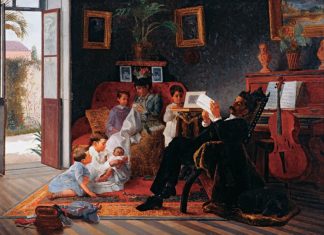
The Doctor and the Monuments
In 2020, the first model of the "Monumento à Bandeiras", by Brecheret, will be 100 years old. Based on a canvas by Almeida Jr., Tadeu Chiarelli exposes the demands of the São Paulo bourgeoisie to honor the bandeirantes, opposing them to the new positions against the bandeirantes and the Monument itself.

Approaches and distances between J. Carlos and Mucha on Avenida Paulista
Simultaneous exhibitions by the Brazilian artist, at the Moreira Salles Institute, and the Czech artist, at the Fiesp Cultural Center, allow contact with fundamental issues for the graphic arts and for society from the end of the 19th century to the present day.

Concrete, neoconcrete: semantization continues
Tadeu Chiarelli comments on the work of several artists who engaged in dialogues with constructive currents, from Rubem Valentim and Nelson Leirner to Lyz Parayzo and Jaime Lauriano

Sérgio Sister and his resistance weapons
The austere and rigorous works that Sister produces today maintain, from the paintings and drawings of his early period, the same force.
Sérgio Sister and his weapons of resistance
The austere and rigorous works that Sister produces today retain, from the paintings and drawings of her early period, the same strength

The aura, the reproducibility and the vintage
What would Walter Benjamin say if he reappeared here? How would you react to art and its reproducibility after, above all, the internet and smartphones?