By Giuliano de Miranda
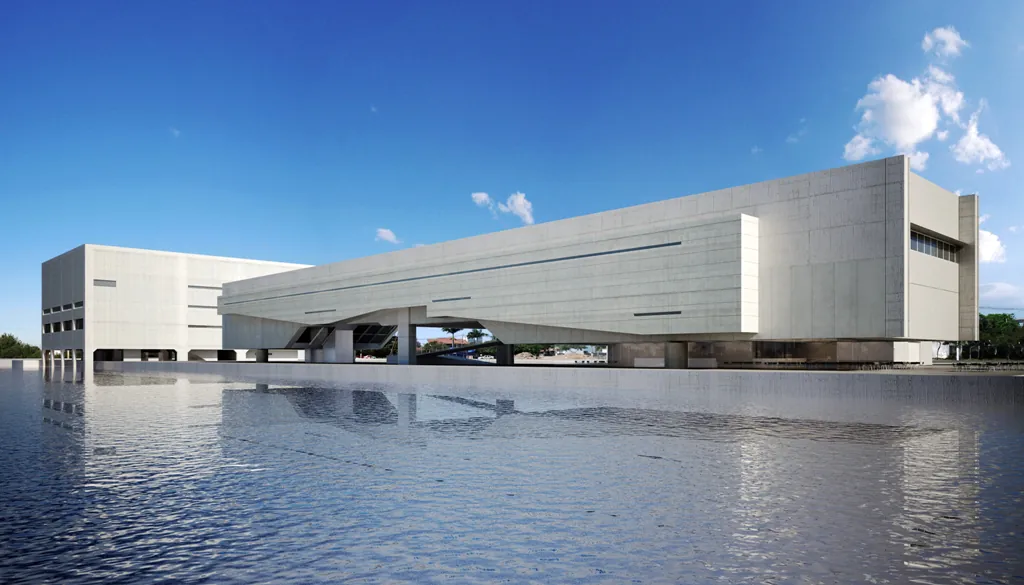
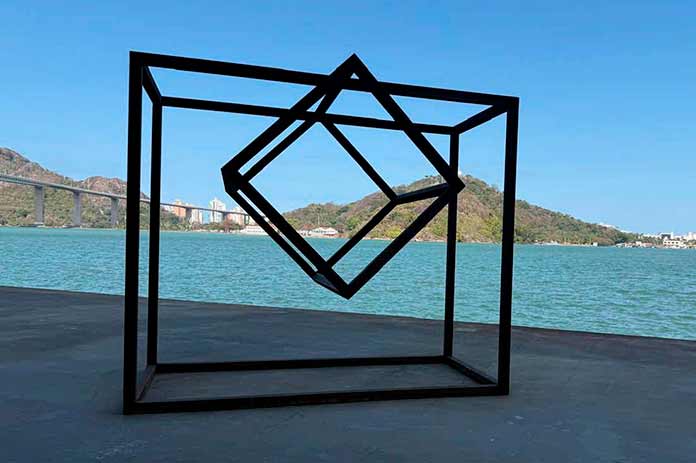
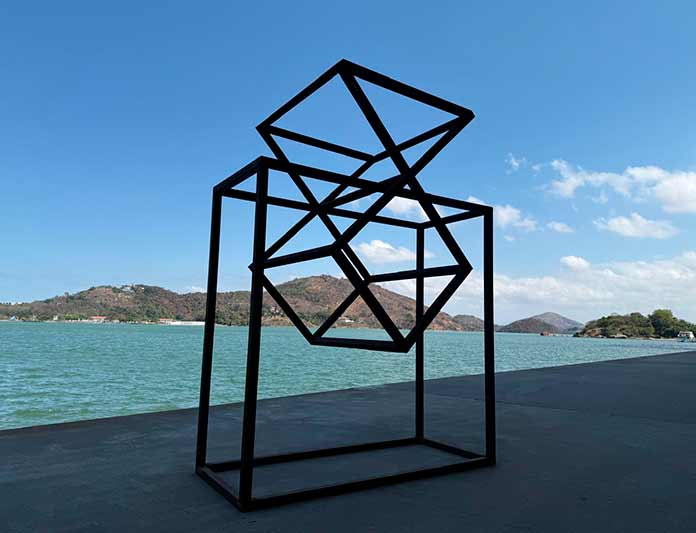
On the shores of Vitória Bay, the Cais das Artes (Arts Wharf) is beginning to incorporate its outdoor area into its visual arts programming. The cultural complex, designed by Paulo Mendes da Rocha in the capital of Espírito Santo, is hosting Ala Mar, an initiative focused on occupying its plaza and other open spaces with works by contemporary artists and educational activities. The opening features two sculptures by Raul Mourão, Hourglass e The Flag, by 2020, and world-home-world, a commissioned installation by Rick Rodrigues from Espírito Santo, curated by Clara Sampaio.
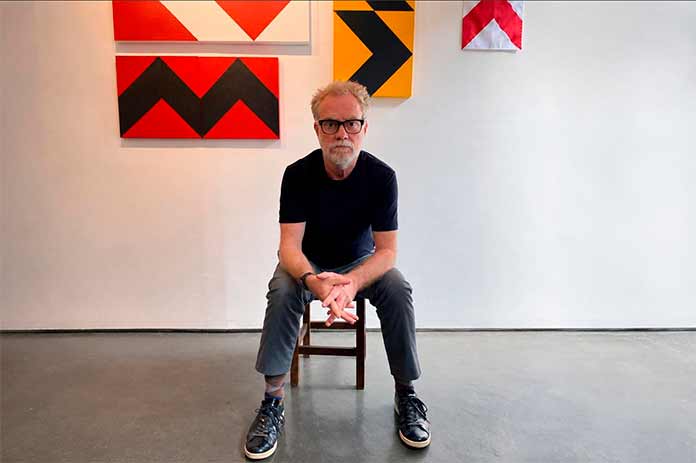
Mourão's presence establishes a particular relationship with a building whose architecture is imposing in its scale and materiality. Born in Rio de Janeiro in 1967, the artist has been developing a body of work since the late 1980s that encompasses drawing, photography, video, sculpture, and installation. City and urban space occupy a recurring position in this trajectory, although his research is not restricted to a single language or series.
Also known as GradesInitiated by observing the protective structures that have modified the landscape of Brazilian cities, Mourão later incorporated movement and participation into his sculptural production. At Cais das Artes, this investigation reaches an open space, traversed not only by the public interested in exhibitions, but also by the daily circulation of the city. In an interview with ARTE! Brazilians, Raul Mourão talks about the two works, the passage of Grades for kinetic production, its relationship with architecture and urbanism, and the growing interest in large-scale projects in public spaces.
Giuliano de Miranda: The two sculptures displayed at Cais das Artes were created in 2020. In what context did they emerge?
Raul Mourão: These are two sculptures that I designed during the pandemic. They were created during that absolutely terrible moment of social isolation, of living with death, which affected us all. I was isolated and I drew a lot, I did a lot of work. These two sculptures were born at that moment.
GM: At what point does the audience become part of the work?
MRI: This entire series of kinetic and interactive sculptures encourages audience participation, allowing them to touch the artwork and activate its movement. The idea is to have the audience as a partner, a kind of co-creator. The sculpture has a static life, but when the viewer activates it, it begins to move. It's as if there are two distinct modes: stillness and movement. This participation also places the viewer in a privileged position of observation. They activate the artwork as if it were a machine, and a dance of forms begins. This geometric movement demands a different kind of engagement. The viewer becomes co-responsible for the complete operation of the artwork.
GM: How did you conceive these sculptures for the Cais das Artes space?
MRI: They were created in 2020, but I chose them later to present at Cais das Artes. There were several other options, and I felt this pair was the most suitable to occupy this large square where the museum is located. It's a large public space that Paulo Mendes da Rocha generously gives to the city, to the people of Vitória. The museum could simply be a closed building, but he suspends the building and leaves the landscape free.
The architecture of Cais das Artes is very material. Concrete is the protagonist. It's a raw architecture, with large geometric volumes. In my sculpture, there is also this element of geometry, of pure geometric form. I think there's a very direct dialogue: sculptures that celebrate the lines of geometry in the face of an architecture that also possesses this characteristic.
GM: How has your artistic research evolved since the series? Grades?
MRI: A série Grades This work comments on the crisis of public security policies in large Brazilian cities, the increase in violence, the feeling of insecurity, and how this affects people's lives and modifies the landscape. In my childhood, the buildings I frequented in Rio de Janeiro were not surrounded by fences. In my youth, I began to see the arrival of these structures and also other security items, such as cameras and various devices that modified and obscured the city's landscape. It was this transformation that originated the series. I produced many works in different media: photographs, screen prints, installations, and sculptures. In parallel, I developed other research. At a certain point, the "Grades" ended up transforming into kinetic and interactive sculptures. There was an experiment in which one piece was supported on top of another, and this movement became part of a choreography. From there, I developed several works that continue to this day.
GM: Has the kinetic dimension become the main element of your work?
MRI: No. The kinetic sculptures are one of the series I'm developing. I work with video, I have static sculptures, paintings, and other research. My work isn't limited to a single body. Several series can coexist at the same time, dialoguing in parallel. The kinetic series is important, it has a large dimension within the production and still has much to be developed, but it doesn't restrict the work.
GM: What still sparks your interest in the relationship between art and the city?
MRI: The city's public space is a desire. When you start working with sculpture, this ambition naturally arises: to have a work in the city, creating a sculptural landmark, an urban landmark. It has always been a goal of mine, and I have been working more and more in that direction, trying to implement projects in public spaces, to make the work an event outside the walls of galleries, museums, and collections.
In recent years I have developed several projects in this direction, both temporary and permanent. I have a great desire to carry out work on a larger scale, in this public dimension.
GM: Is it possible to balance the public's freedom of interaction with the preservation of the sculptures?
MRI: Absolutely. The work was designed precisely for that purpose. It's interactive, but it was also conceived and executed technically to withstand the test of time, to endure. It's a work constructed of corten steel, and the handling and movement cause wear and tear, but all of that is part of how it was conceived.
The issue also lies in the artwork being incorporated by residents, visitors, and public administration, creating identification and engagement with that space. This helps to ensure its integrity. The important thing is that it's not just ornamentation or decoration. It needs to have poetic content and participate in the invention of the city.
GM: How do architecture and urban planning fuel your creative process?
MRI: I admire great architects; I'm an observer of architecture, I travel, I buy books, I watch documentaries. But I would say that there are also similar issues regarding the development of a project. There's the drawing, which becomes an electronic model, then a model and technical drawing, until it's executed. There's a similarity in the technical work, in the routine of the studio. It resembles an architecture or design office, where you have concept, drawing, project, and execution. In urban planning, I have a special appreciation and admiration for the Flamengo Park in Rio de Janeiro. I think it's a brilliant work. It's a very particular experience within the city.
GM: What do you hope visitors will take away after experiencing these sculptures?
MRI: I hope it leaves you more curious. I think a work of art is meant to touch the senses, to disturb. It's also meant to enchant, awaken new desires, warm the heart, stir the mind. We hope to awaken something in the viewer, to make them think, to provoke a little euphoria, emotion, life. That's what we intend when we put a work of art into the world.
GM: And what is the role of art when it occupies public space?
MRI: Art is a struggle for territory. Every artist fights for their space, for the survival of their peers, their practice, their poetic experience. Making art more accessible, democratizing it, taking it to other places, producing educational content, disseminating it, fighting for its circulation, for the preservation of art spaces and for the creation of new spaces: all of this strengthens the cultural system. It is a permanent struggle.
GM: In over three decades of your career, what has changed most in your creative process?
MRI: There is one thing that endures and that is precious to me: the freedom to move through different mediums and not be bound by dogmas. Any object, any scene I see can be an inspiration, and any medium can support an idea. I can express myself through video, text, performance, object, sculpture, or painting. This runs through my entire journey.
What changed was a material issue. In the beginning, I worked alone in a small room. Today I have a studio prepared to transform an idea into a finished work. There is the physical space, but there are also people to transform ideas into things in the world. You can build an environment that makes this happen. What could remain a poetic reverie or a scribble on a sheet of paper can become a sculpture because there are material conditions to realize it.
GM: What research and projects do you plan to develop in the coming years?
MRI: I'm returning to public sculpture, to large-scale projects, to urban spaces, and to large-scale exhibitions. There's also a moment when curators begin to look at trajectories and bring together works from different periods in a more organized way, with a research-oriented approach. This is starting to happen in my career. But I remain very interested in this public dimension, in projects that can gain scale and establish a relationship with the city.
Curatorship
The selection of works by Raul Mourão is part of a broader proposal for the outdoor areas of Cais das Artes. Ala Mar establishes a program of outdoor installations and educational activities, occupying spaces such as the Praça do Cais and the complex's open space, bringing together contemporary art, architecture, and landscape, with an opening marked by Mourão's Hourglass and The Flag, and Rick Rodrigues' world-house-world. In the installation by the artist from Espírito Santo, a human-scale house receives embroidery interventions carried out with the participation of visitors through workshops and mediation activities.
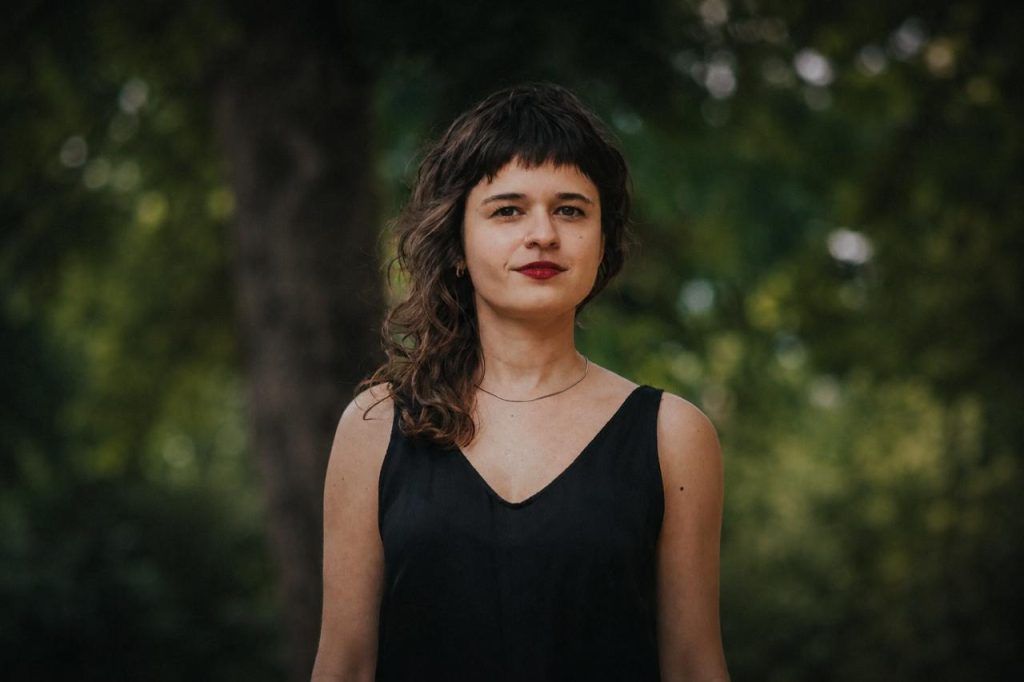
Clara Sampaio, curator of Cais das Artes, is an artist and researcher with a doctorate in Contemporary Art from the University of Coimbra and a master's degree in Arts from the Federal University of Espírito Santo (UFES). For her, the "ala mar" (seaside wing) should not be understood simply as a public art program. As the interventions remain linked to the institution's territory, the curator prefers to speak of "art and educational actions outdoors".
GM: How did the Ala Mar proposal come about?
Clara Sampaio: Ala Mar emerges as a program of outdoor art installations, designed to activate and give new uses and meanings to the external areas of Cais das Artes. The proposal stems from the understanding that these spaces, often perceived as mere transit points, possess great potential for interaction and experimentation. Thus, the program seeks to bring together art, architecture, and landscape, creating situations of lingering that are also opportunities for contemplation and critical thinking.
GM: What makes this proposal different?
CS: I wouldn't exactly call it a public art program, as it's a proposal entirely tied to the proposing institution. We've been calling it "art and educational activities outdoors," precisely because we understand that we are confined to the Cais area. The program stands out for establishing a direct and continuous dialogue with the museum's architecture and its urban setting. More than just works scattered in public space, it welcomes artistic proposals in an integrated way, considering scale, flows, relationship with the landscape, and the creation of educational mediation activities based on these elements.
GM: Why was Raul Mourão chosen for the opening?
CS: The choice of Raul Mourão stems from a consistent trajectory and investigation into urban space and the structures that organize life in society. His work proposes an attentive and critical look at the devices we supposedly build to protect ourselves, delimit, and inhabit the world. Starting the program with an artist who reflects on these scales of collective living is especially significant given the monumentality of the Cais, creating a starting point that both creates tension and brings together architecture, the city, and everyday experience.
Furthermore, the artist has participated in several exhibitions in Espírito Santo, having recently held a solo exhibition at the Galeria Gabinete, in the Casa do Governador Cultural Park, which also demonstrates an already established relationship with the local artistic context.
GM: How do the artworks interact with the architecture of Cais das Artes?
CS: The works selected for the sea wing exist in two ways: by invitation, for the presentation of existing works, or through commissioned proposals and, therefore, original works. In direct relation to the architecture and the social dynamics provoked by the Cais das Artes (Arts Wharf), they establish relationships of approximation and contrast with its scale, materiality, and symbolic vocation. Instead of competing with the building, the interventions seek to highlight its particularities and make its potential uses visible. This dialogue reinforces the public and open character of the Wharf, while inviting the public to experience the space in a free and participatory way.
The presence of Raul Mourão's sculptures at Cais das Artes, in this sense, goes beyond the mere act of an open-air exhibition. By bringing together the work of a nationally renowned artist with the architecture of Paulo Mendes da Rocha and, simultaneously, opening space for local art, the complex establishes possibilities for dialogue that have long been insufficient in Espírito Santo. More than just receiving artists from other states, it is important to build a circuit capable of promoting exchanges, stimulating circulation, and inserting locally produced works into broader dialogues. Cais das Artes can contribute to this movement by placing Vitória back on the map of discussions about contemporary art, architecture, and public space in Brazil.