By Giuliano de Miranda
With its new headquarters under construction in the Port of Vitória, the Vale Museum maintains its programming through outreach activities that reach parks, schools, squares, and partner institutions in different regions of Espírito Santo. This period has broadened the reach of its activities, strengthened partnerships, and brought the institution closer to communities that do not always frequent museum spaces.
The museum's most recent exhibitions have attracted over 258 visitors. This result encompasses projects dedicated to contemporary art, Afro-diasporic and Indigenous cultures, literature, science, memory, and heritage. Beyond the numbers, the institution considers audience diversity, territorial reach, school participation, and engagement with educational activities as criteria for evaluating each initiative.
The main activity on display is IMAGINALIVRE!, dedicated to the trajectory of the Rio de Janeiro-based collective OPAVIVARÁ!. Installations, videos, and relational devices occupy the Galeria Gabinete, in the Casa do Governador Cultural Park, in Vila Velha, the Vale Botanical Park, and the Coastal Park, in Vitória. The exhibition brings together works from different periods and a new piece. Collage of times, a timeline produced on-site to present the history of the collective through exhibitions held in Brazil and abroad. The collection proposes shared experiences, in which body, coexistence, and participation become constitutive elements of artistic creation.
Alongside the programming, the Vale Museum is establishing its future headquarters in Warehouse 4 and the adjacent building in the Port of Vitória. The project will bring together temporary exhibitions, a railway collection, educational activities, artistic residencies, an auditorium, a library, and the Memory Center of the Vitória-Minas Railway.
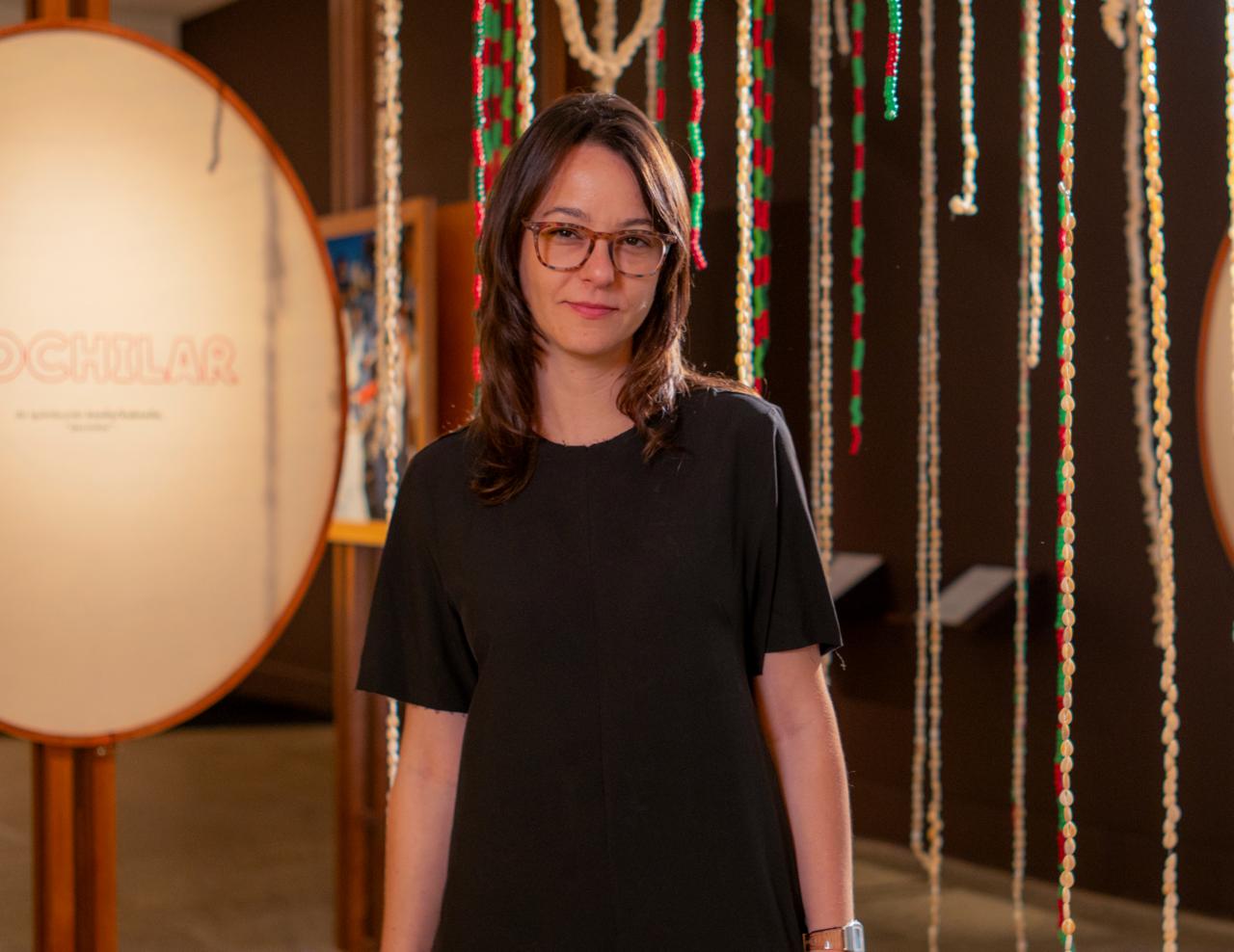
In interview with ARTE!BrasileirosIn this interview, director Claudia Afonso discusses the museum's circulation throughout the state of Espírito Santo, the concept behind IMAGINALIVRE!, accessibility policies, and plans for the new space.
Culture in circulation
ARTE!Brasileiros: During its time outside the museum's walls, the Vale Museum began occupying parks, schools, squares, and partner institutions. How did this movement change its relationship with the different territories and audiences of Espírito Santo?
Claudia Afonso: This period has been a great challenge and, simultaneously, an opportunity to expand our presence in the territory, strengthening dialogue with audiences, communities, schools, and partner institutions in different regions of Espírito Santo.
By occupying parks, squares, schools, and other cultural spaces, we developed new ways of engaging and built close relationships with people who might not normally visit museums. This outreach also broadened our listening skills and provided important lessons about accessibility, audience development, and networking.
We have strengthened fundamental partnerships and created connections that continue to generate further developments. This is a legacy built over the last few years that will remain with us. I see this journey as a process of learning and expansion, responsible for reaffirming the importance of keeping the museum connected to people and the different realities of the state.
A!B: The most recent exhibitions organized by the Vale Museum attracted over 258 visitors. Beyond the number of visitors, what criteria allow us to evaluate the cultural, educational, and social impact of these initiatives?
HERE: Receiving many visitors is always a source of satisfaction, but we also observe other aspects that demonstrate the impact of the actions taken. We consider the diversity of the audiences reached, the participation of schools and organized groups, the engagement in educational activities, the territorial reach of the initiatives, and the quality of the partnerships built in each project.
We also seek to listen to those who participate; we are very interested in understanding how people experience the visit, what reflections arise from this contact, and how the activity contributes to bringing them closer to art and culture. This listening guides new proposals for the museum's programming and is important for creating bonds, generating learning, stimulating cultural participation, and strengthening the presence of art in people's lives, especially those from Espírito Santo.
IMAGINAL FREE! and audience participation
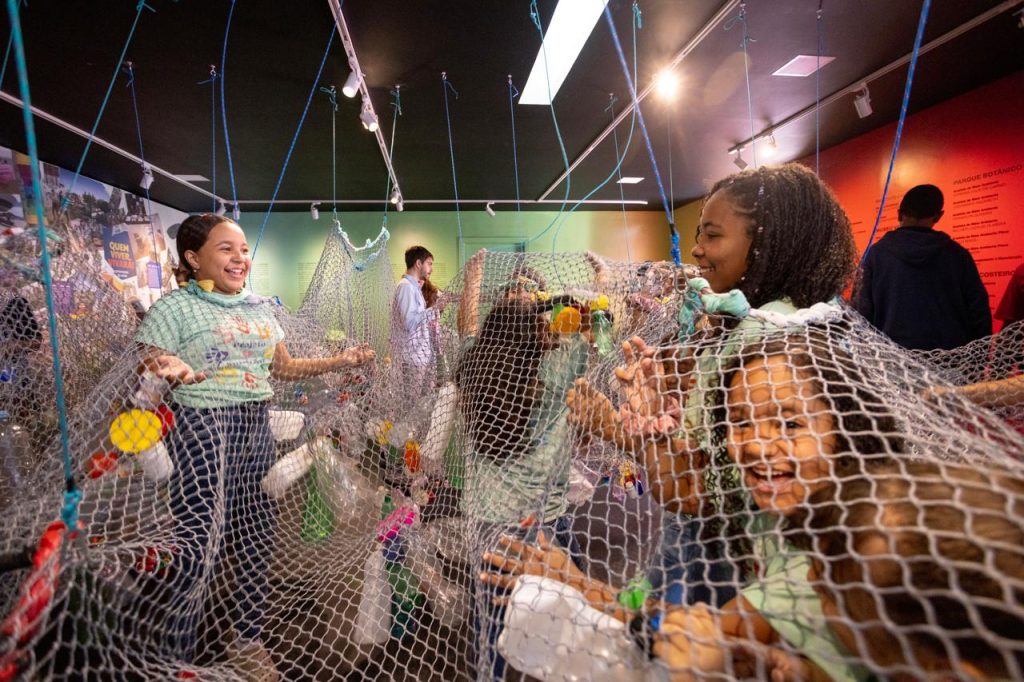
A!B: IMAGINALIVRE! brings together works from different periods of the more than 20 years of OPAVIVARÁ!. What criteria guided the selection and conception of the exhibition for Espírito Santo?
HERE: The invitation to create IMAGINALIVRE! stemmed from the celebration of OPAVIVARÁ!'s more than 20 years of activity, a rare milestone in the trajectory of an artistic collective and a special opportunity to celebrate, in Espírito Santo, the permanence and relevance of a production built over more than two decades. In my view, the collective's production is one of the most interesting and important in the art scene. From the beginning, the curatorial process was done collectively, in dialogue with the artists and in accordance with OPAVIVARÁ!'s mode of production, which consists of encounters, exchanges, listening, and shared construction. The selection presents works from different periods, revealing continuities and shifts.
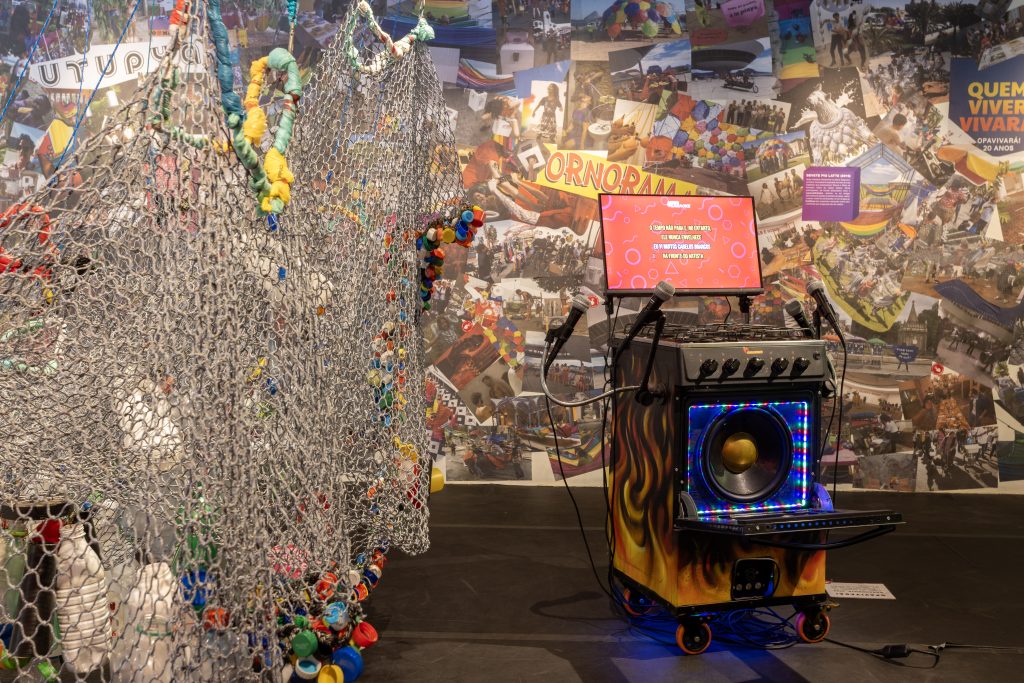
The project includes a new construction, Collage of timestimeline created on-site visit which narrates the group's history primarily through its exhibitions in Brazil and abroad. By bringing the exhibition to Espírito Santo, we sought to establish a sensitive dialogue with the territory and the current moment of the Vale Museum. The chosen works approach aspects present in the life of Espírito Santo, including the landscape, the coastline, public spaces, conviviality and outdoor life, but also a question that seems especially important to us today: how to recover the proximity between bodies, people and the places we experience.
A!B: The artworks depend on the touch, presence, and participation of visitors. How does educational work prepare the public to understand their role in constructing the artistic experience?
HERE: The development of the educational work began with a dialogue with OPAVIVARÁ!. We sought to understand the nature of the works, their intentions, and the modes of interaction in order to define how to welcome and invite the public. We conceived of mediation almost as a non-mediation. The works themselves make a very direct invitation to presence, to touch, and to encounter, awakening curiosity and a desire to experiment before any explanation. Instead of guiding, the educational approach seeks to be available and close, accompanying, listening, and creating space for each visitor to discover the exhibition in their own way.
This practice occurs through presence, listening, and the multiplicity of trajectories. Each person arrives with their own repertoires and memories, while the artworks allow for the encounter of these experiences.
A!B:What motivated the distribution of the exhibition between the Gabinete Gallery, the Vale Botanical Park, and the Vale Coastal Park?
HERE: The exhibition's placement in different spaces aligns with the Vale Museum's outreach activities. We have sought to broaden access to culture and create opportunities for art to reach people in various territories and contexts. Each location offers its own possibilities for engaging with the artworks. At the Gabinete Gallery, in the Casa do Governador Cultural Park, visitors can explore a wide range of OPAVIVARÁ!'s work, including installations, videos, and relational devices that help to understand the collective's trajectory.
The choice of this important cultural space in Espírito Santo also makes sense because of the presence of Magic Square #3, by Hélio Oiticica, a reference for OPAVIVARÁ! and for a Brazilian art movement that shifted the artistic experience from the field of contemplation to that of participation, the body, and relationship.
In the Vale and Coastal Botanical Parks, the artworks establish a more direct dialogue with the landscape, nature, and the outdoor experience.
This circulation reinforces something common to OPAVIVARÁ! and the Vale Museum: art happens in the movements, in the streets, in an itinerant and shared way, in the most diverse spaces that cities can offer us.
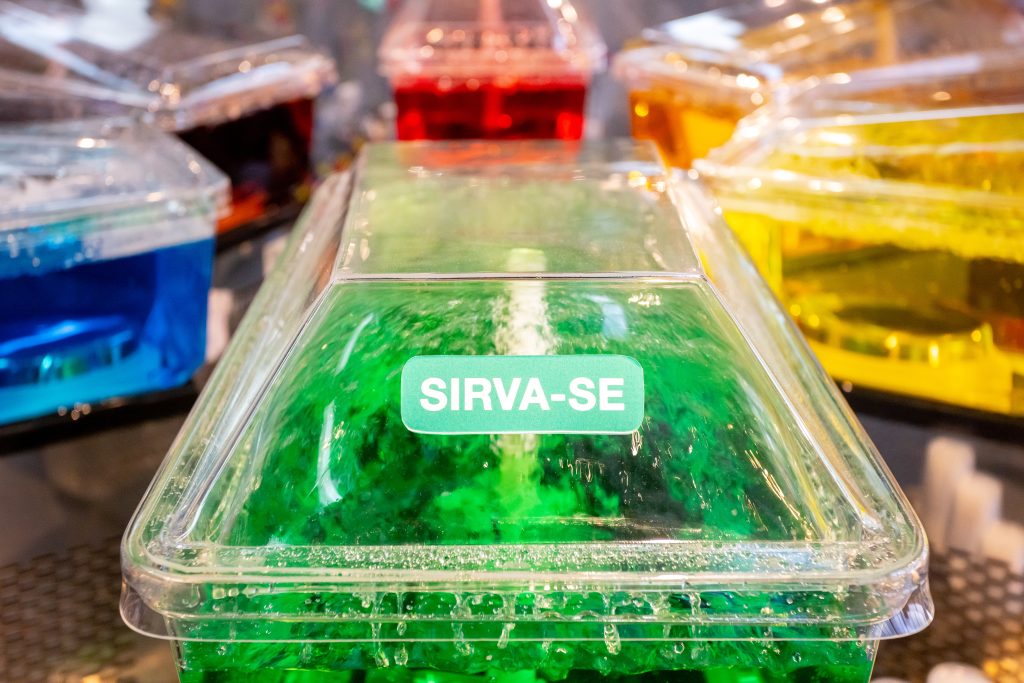
A!B: Works like Karaokente, Fonte de Refrescos, and Saia Como bring together art, cooking, music, the body, colors, and flavors. How do everyday references facilitate contact between different audiences and contemporary art?
HERE: The shift in uses and meanings first awakens curiosity and, for those who allow themselves to, the desire to experiment. A stove becomes a karaoke machine, a skirt emerges from cutlery, and an installation involves colors and flavors. At this point, OPAVIVARÁ! dissolves some of the seriousness and detachment that often surround art, especially in institutional settings.
The artworks function as devices for invention, creating different choreographies and possibilities for participation. Each person enters through a path, based on their own repertoire, and can discover new meanings for what, until then, seemed absolutely familiar and everyday.
A!B: In what way Systemar e Social Rede Do they combine participation, playfulness, and environmental reflection?
HERE: Both works address issues that arise during their activation. In Social RedeThe invitation to pause, to linger, and to spend time together directs our attention to the quality of the relationships established between us and our surroundings. Systemar, in turn, transforms references to plastic waste and the oceans into a collective, sonic, and festive experience.
Created in reference to the Great Pacific Garbage Patch, a large area of floating plastic accumulated in the North Pacific Ocean, Sistemar makes evident the concern for the present and future of the environment. The work also alludes to Divisor, one of Lygia Pape's most emblematic works. The plastic, the evocative soundscape of the sea, and participation allow environmental issues and climate change to permeate the experience in a sensitive way, without overshadowing other possible interpretations.
I believe that one of the most brilliant aspects of OPAVIVARÁ! lies precisely in its ability to address complex issues, their tensions, and even forms of protest, through accessible, irreverent, and festive experiences. Participation is not just a way to bring the audience closer, but a way to produce thought and open up other possibilities for relating to what surrounds us.
A!B: How can children, students, families, senior citizens, and people with disabilities participate in the experiences offered by the exhibition?
HERE: In IMAGINALIVRE!, educational work happens primarily through presence and listening. The production of OPAVIVARÁ! itself offers this possibility. The works invite movement, interaction, and the use of the senses, creating forms of participation for people of varying ages and backgrounds. As with our other programs, we envision an exhibition capable of welcoming children, students, families, the elderly, and people with disabilities, respecting the specificities and interests of each group.
An example of this practice is integrated into the programming of 20th Spring of MuseumsBetween September 22nd and 25th, IMAGINALIVRE! will offer activities for diverse audiences, including guided tours with sign language interpreters, programs for blind or visually impaired individuals, sensory experiences for babies accompanied by their caregivers, and a tour adapted for neuroatypical individuals. These initiatives reflect a continuous commitment to broadening access and creating conditions for a welcoming and meaningful cultural experience.
The new headquarters in the Port of Vitória
A!B: At what stage are the works on the new Vale Museum headquarters, and what is the current estimated date for its opening to the public?
HERE: The works are in progress, and the opening date is still to be determined. Meanwhile, our outreach has allowed us to expand our presence in the state of Espírito Santo through partner institutions, reaffirming our commitment to democratizing access to art and culture.
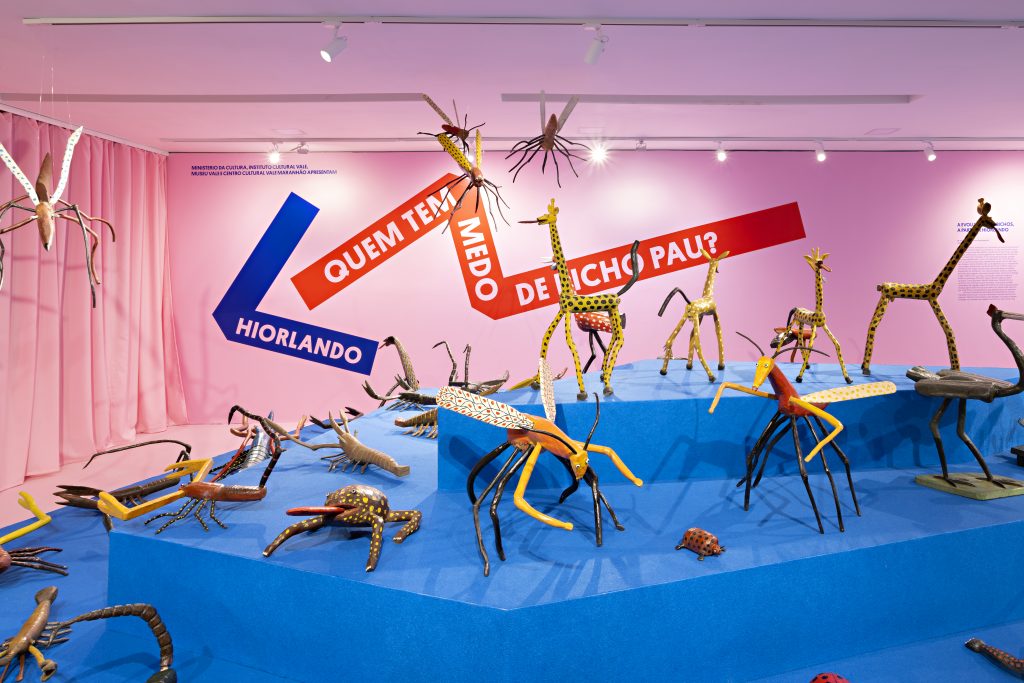
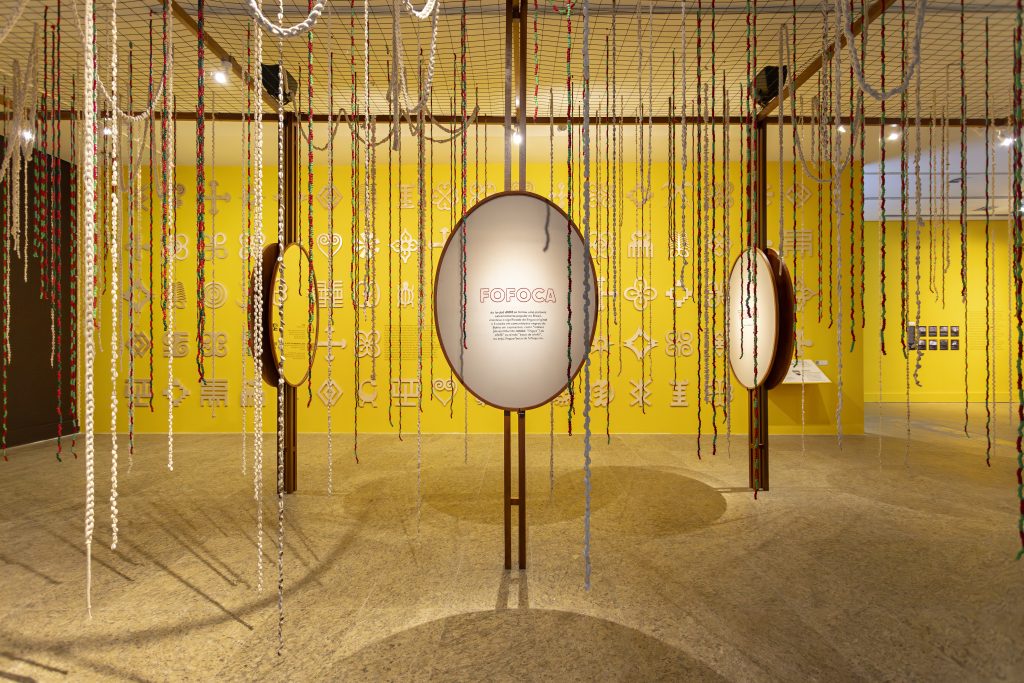
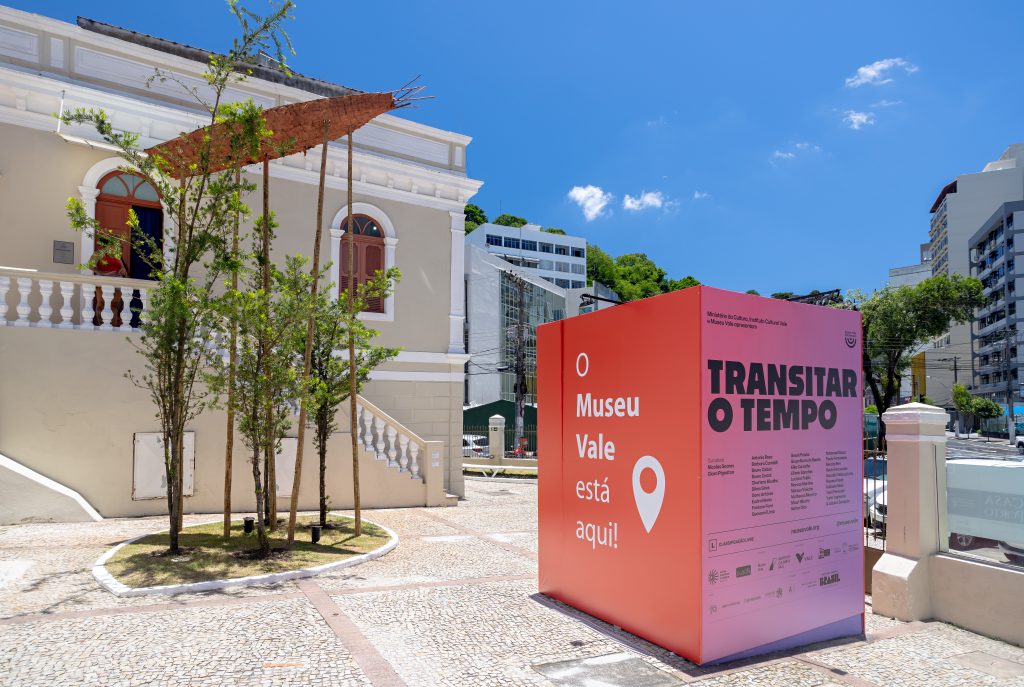
The most recent exhibitions have received over 258 visitors. Among them are African Languages that Make Up Brazil, Map Breaker, Who's Afraid of Stick Insects?, Lives in Cordel Literature, Transiting Through Time, Leafing Through, The Extraordinary Universe of Leonardo da Vinci, Memories of the Future: A Look at the IHGB Collection, and Where Dreams Come From: The Andrea and José Olympio Pereira Collection.
The Vale Museum will be located in Warehouse 4 and the adjacent building, occupying a total area of 3,9 square meters in the Port of Vitória. Approximately 850 square meters of the warehouse will be dedicated to temporary exhibitions. Two of the building's five floors will house the long-term exhibition comprised of the historical collection of the Vitória-Minas Railway. The project includes a room for the educational program, studio and artist residency areas, an auditorium and library, as well as housing the Vitória-Minas Railway Memory Center. On the rooftop, there will be a restaurant/café with panoramic views of Vitória Bay and the historical center of the capital.
A!B: How will the future headquarters integrate contemporary art, education, railway history, port history, and cultural production from Espírito Santo?
HERE: The new headquarters is being conceived as a meeting place for memory, creation, education, and culture. Its location in the Port of Vitória has significant symbolic value, as it brings together stories linked to the railroad, port activity, and the development of Espírito Santo.
We will bring extramural learning to the new address and want to build not only a space for preserving railway and port history, but also an environment for contemporary production, the cultural scene of Espírito Santo, and the voices that constitute the territory.
Perspective
The period spent outside the museum's premises altered the relationship between the Vale Museum and Espírito Santo. The temporary absence of a fixed location did not interrupt activities. On the contrary, it led to projects being moved to new locations, brought communities closer together, fostered partnerships, and incorporated experiences that may guide the next institutional phase.
IMAGINALIVRE! synthesizes this movement. Spread across three spaces, the exhibition combines contemporary art, participation, education, accessibility, and contact with the landscape. The presence of Magic Square #3The exhibition by Hélio Oiticica at Galeria Gabinete expands the dialogue between generations of Brazilian art linked to participation and bodily experience.
The future installation of the new headquarters in downtown Vitória signifies an important chapter in the museum's history. By bringing together railway history, port history, artistic creation, and local production, the new Vale Museum will be able to consolidate a space connected to the capital of Espírito Santo and, simultaneously, capable of projecting the state onto the Brazilian cultural circuit.