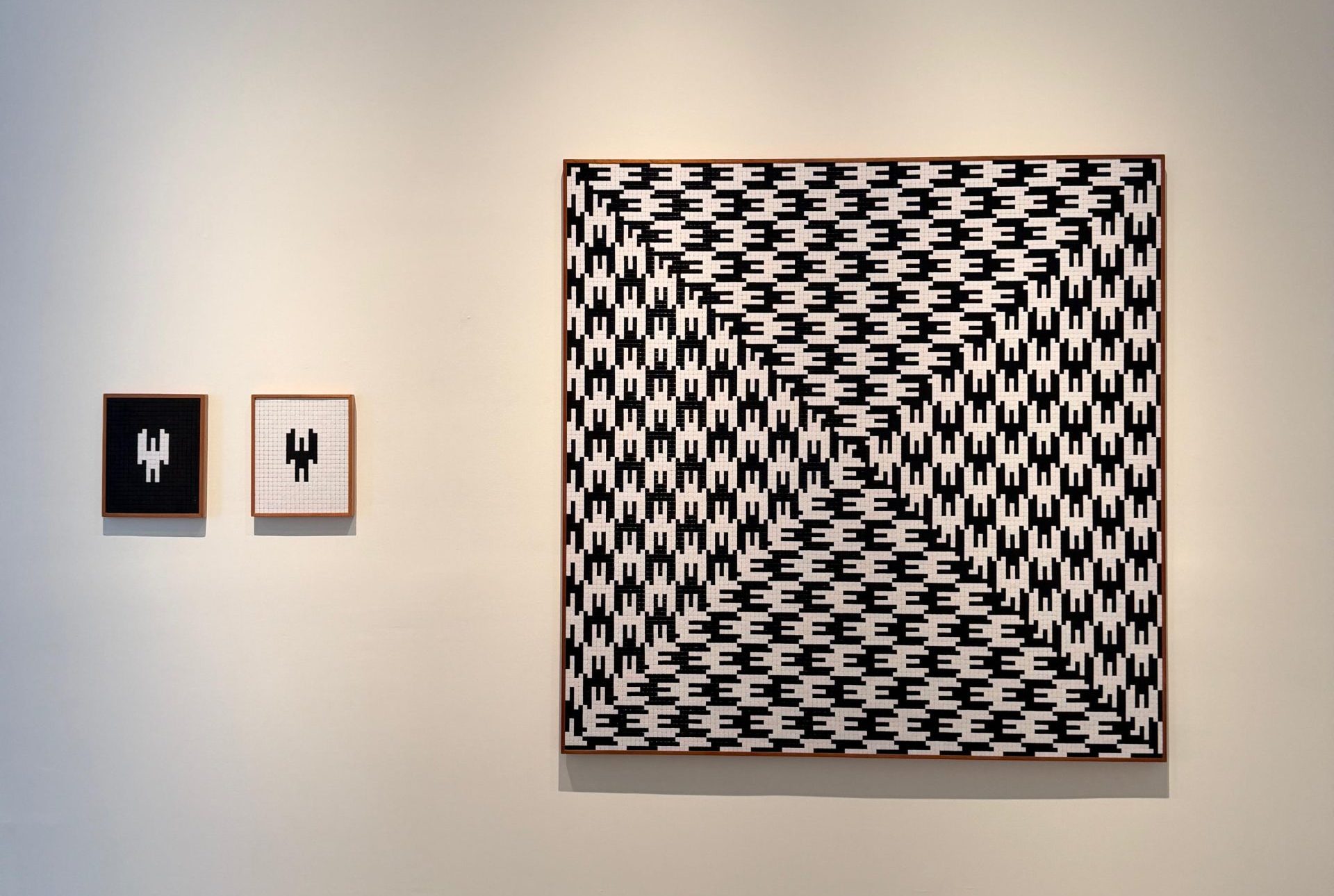
From afar, it looks like paintings. Up close, the gaze blurs everything, and what seemed painted is made with dominoes, dice, puzzle pieces, and small tiles salvaged from ruined walls. José Patrício doesn't hide the origin of these materials. It's precisely when we recognize them that the image begins to change.
The artist from Pernambuco opens Games and other constructions at the NG Art Gallery in Panama, curated by Gerardo Mosquera. The exhibition title suggests two recurring actions in Patrício's work: playing and building. One presupposes rules, but allows for the unexpected. The other demands control, although it is not entirely free from chance.
Generally, a domino piece confronts other pieces. A die exists to be rolled; however, in Patrício's hands, it ceases to fulfill that function and integrates sequences, rhythms, and surfaces. The artist subverts the game to begin another, the game of art. The statement contains an inversion: that which should produce an uncertain result can now compose an order. What seems to obey an order sometimes surprises the artist himself.
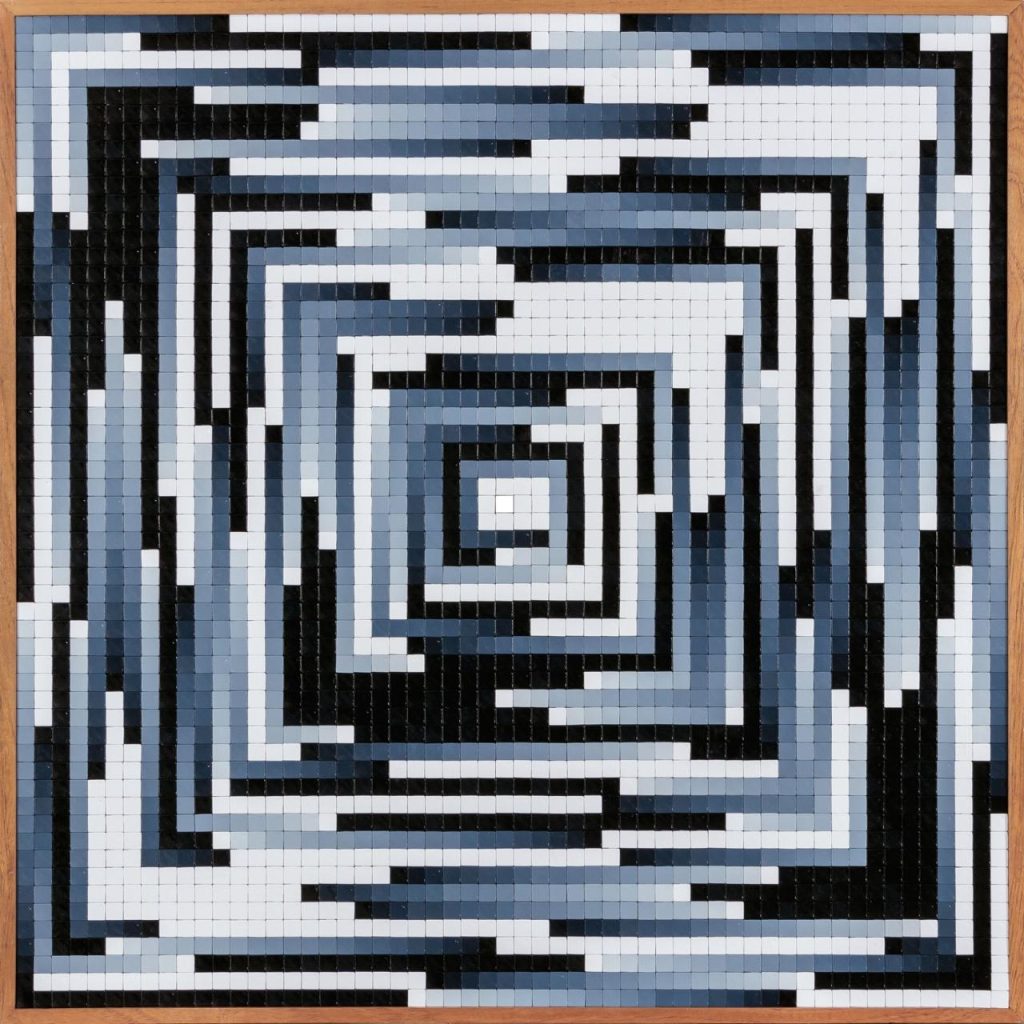
Gerardo Mosquera, critic, theorist, historian, Adjunct Curator The New Museum in New York (1995-2009) highlights that "in Patrício's work, two-dimensional objects, understood as paintings, are capable of creating effects associated with painting, such as chiaroscuro, tonal gradations, and geometric designs." At the same time, paint does not play the main role. The question of whether or not it is painting is less interesting as a classification dispute than for the bewilderment it provokes. Patrício leads the eye to accept an image only to then show what it is made of. And he surprises even experienced curators.
Patrício recalls that his relationship with Mosquera began at the 28th Panorama of Brazilian Art at MAM/SP in 2003, when Mosquera was invited to exhibit in the show. The event's international shift occurred in that edition, curated by Gerardo Mosquera, when the exhibition ceased to be exclusively national and began to operate in international dialogue. The show had a subtitle for the first time: “(messy) 19 Messy"What Mosquera called an 'anti-panorama panorama'. After São Paulo, the exhibition toured several Brazilian cities and the Museum of Contemporary Art of Vigo (MARCO), in Spain, in 2005."
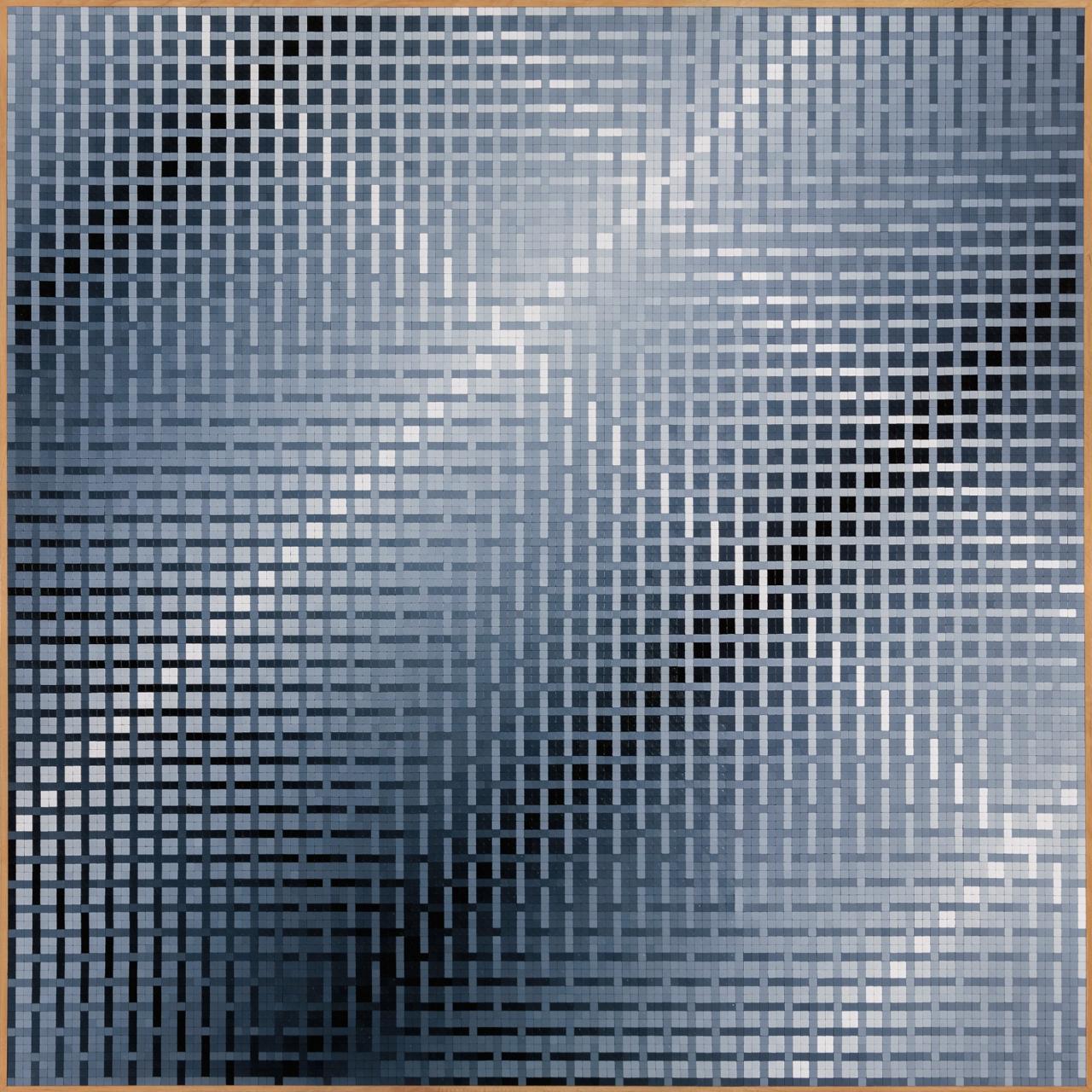
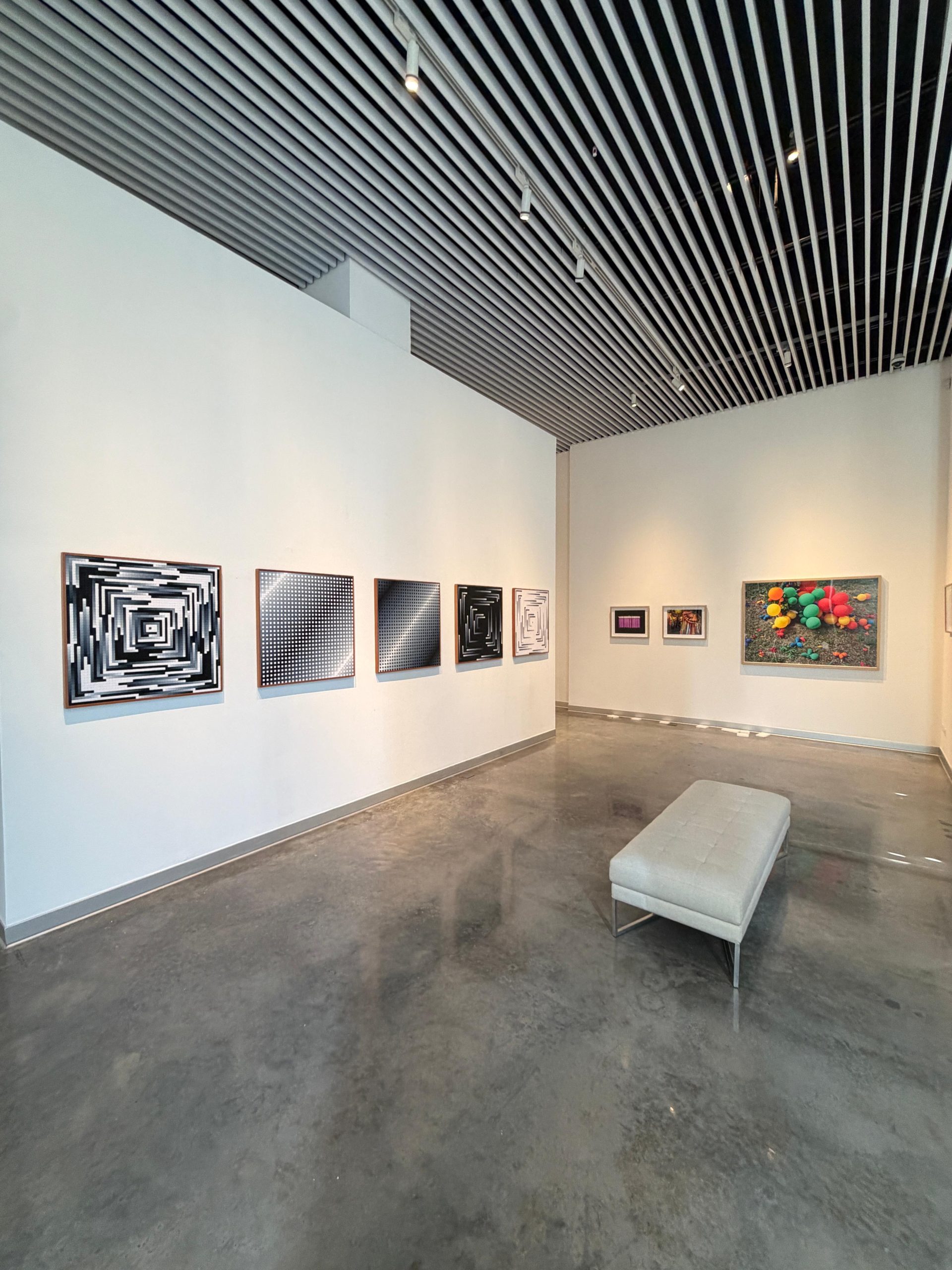
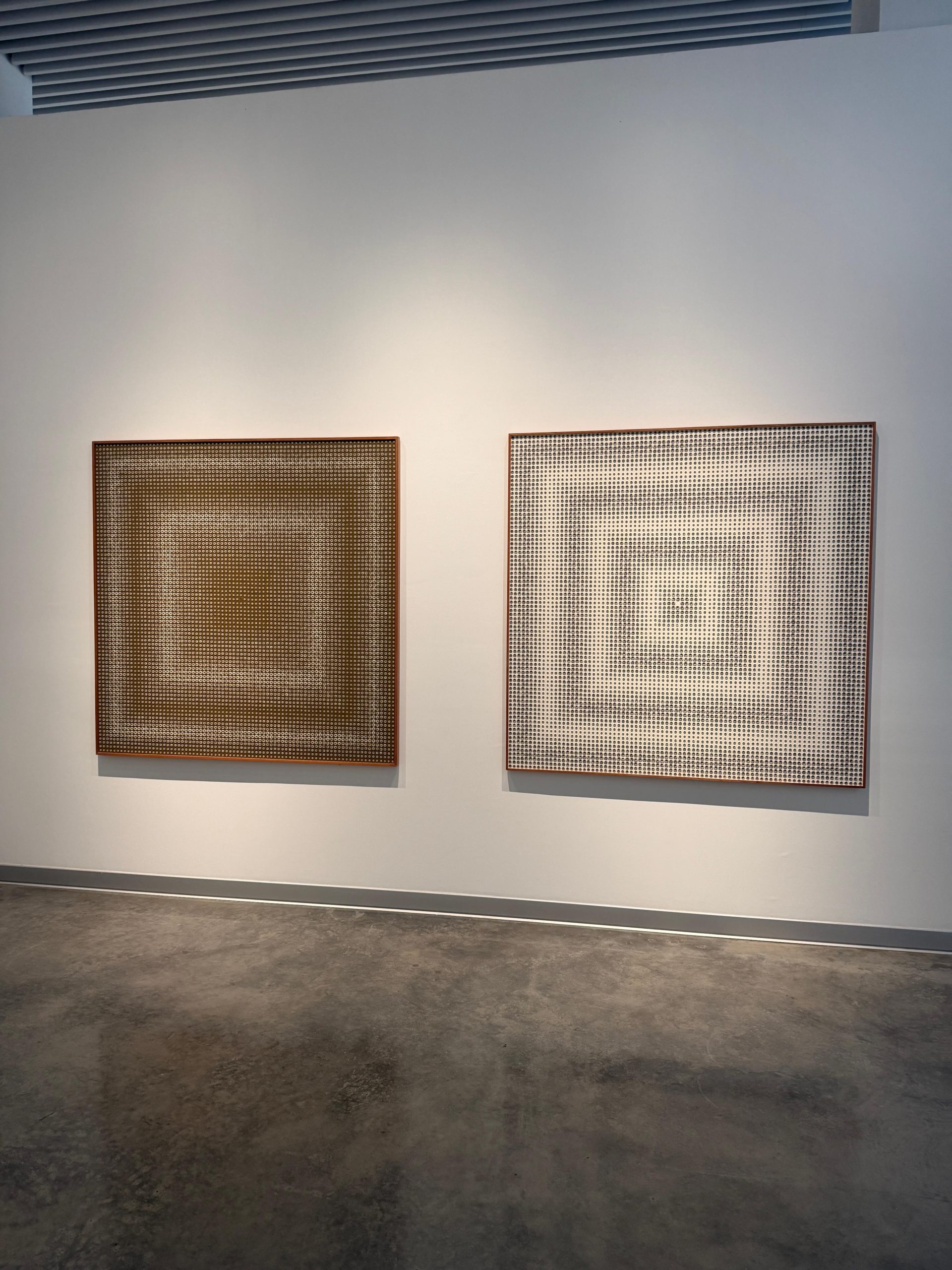
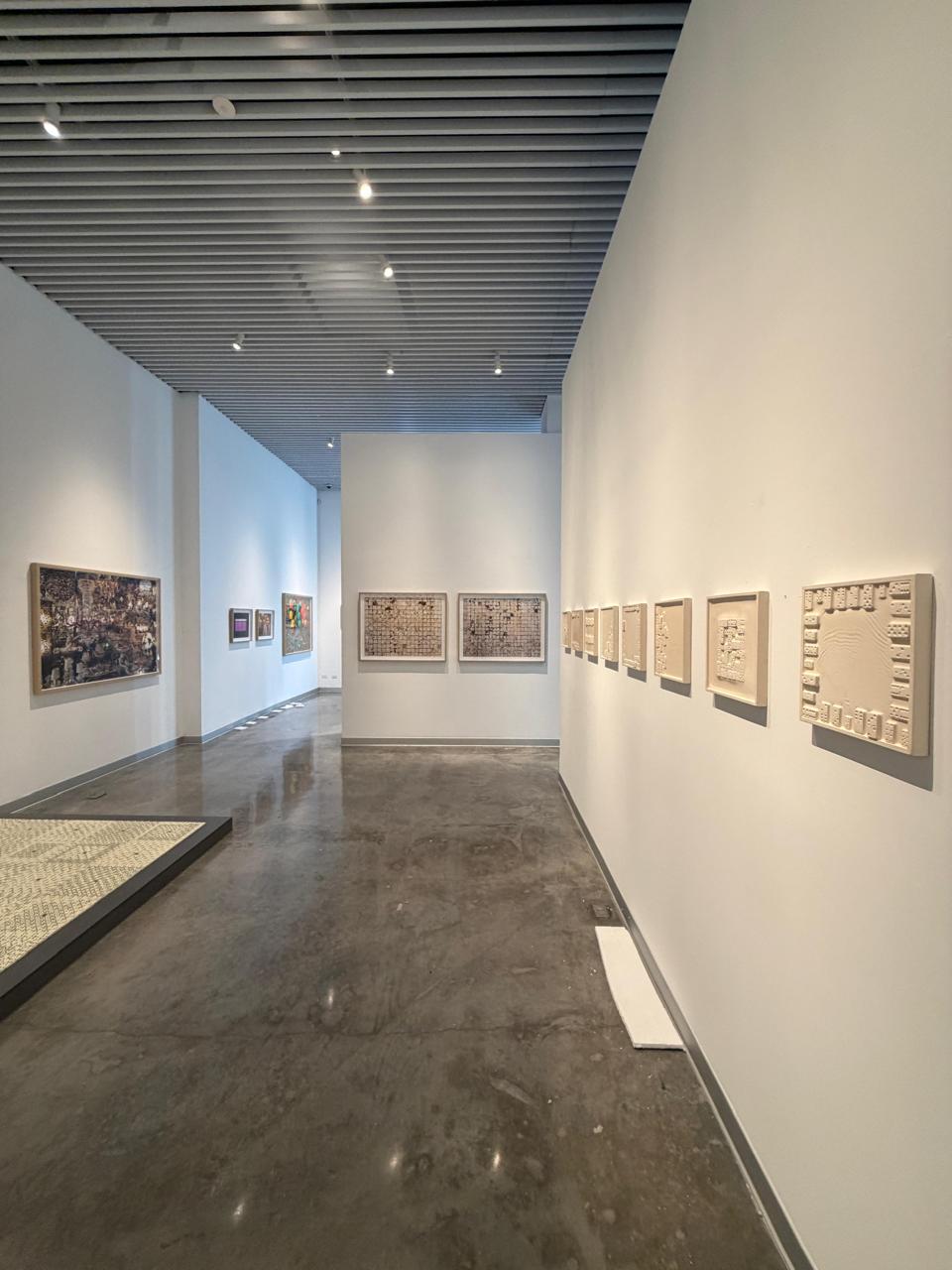
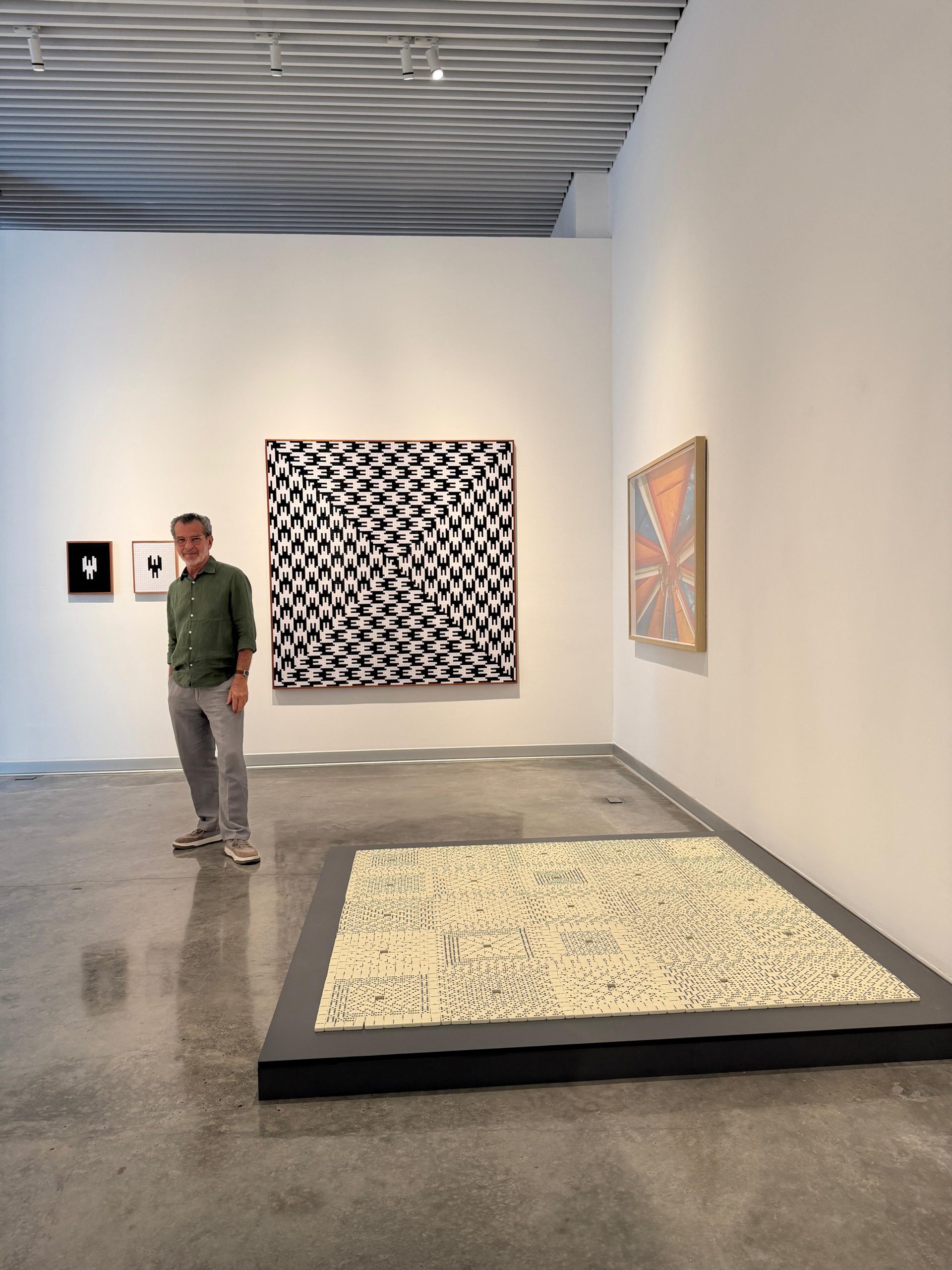
In his curatorial text for Panama, Mosquera uses the Greek word pharmakonThe word "painting," which can mean both remedy and poison, is a way of thinking about something that holds seemingly opposing meanings. This connection can be set aside for a moment. Looking at these works, one perceives that painting remains present even when its usual materials are absent. "Not as a technique, but as a way of organizing light, color, and space before the eyes," says Mosquera.
The use of mathematics brought Patrício the definition, recalled by Mosquera from Paulo Herkenhoff, who named him as Artist of the NumberIt seems the critic wasn't exaggerating.When I conceive a work, usually the first thing that comes to mind is a mathematical formula that determines the result. So, many times I don't even know what the result will be, but I take a chance, I play the game of art and mathematics, which gives me satisfactory results,” he assures. Formulas and series help establish relationships between the pieces, but what remains in the memory is also the vibrancy of the colors, the passage of light across the surface, the hesitation between detail and the whole. Mosquera himself acknowledges the occasional presence of chance, capable of loosening the method. It is in this slack that the construction breathes.
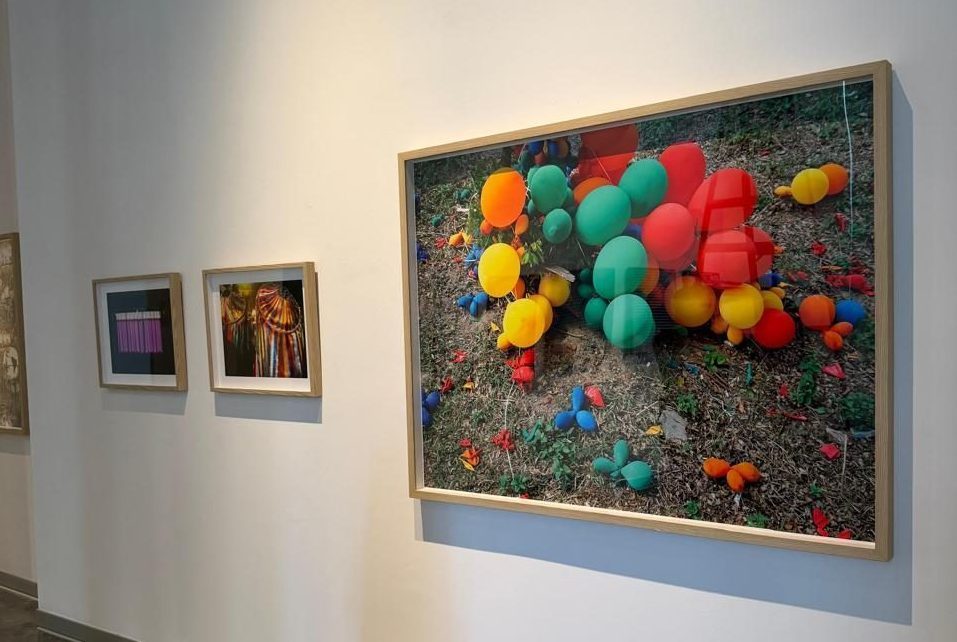
Photography, another facet of Patrício's research, extends this interest in things found in the world. “Photography is the game of the gaze, and it doesn't just serve to record finished works. My gaze seeks encounters of forms and changes in light that don't depend on a formula to exist.” The photographs in the exhibitions may relate to his work with other recurring elements, compositions with numerical sequences. “That's the game of the gaze that counts when I'm photographing, searching for and discovering things as well,” Patrício emphasizes.
Mosquera's selection as curator brings together two trajectories without forcing a common identity. The theme revolves around a much-discussed topic: Against Latin American artThe critic questions the habit of demanding that artists from the region carry a mark of origin in every work. During the interview, he reiterated his defense of art without a "surname," free from the expectation of continuously representing a continent. "Patrício's work is born in Recife and engages with the Brazilian constructive tradition. It also offers itself to any gaze capable of being captured by its tensions. Its origin is part of history and does not need to function as an instruction for interpretation," Mosquera argues.
In 2024, Patrício had a major solo exhibition at the Paço Imperial in Rio de Janeiro, curated by Paulo Herkenhoff, focused on mathematics. Now, in Panama, Mosquera's proposed approach shifts the focus to this restless coexistence between common objects and pictorial ambition. The dominoes remain dominoes. The dice retain the memory of the roll. The tiles carry with them the walls from which they were removed. None of these traces disappear in the composition. This is why the works resist tranquil contemplation: the image forms and, at the same time, reveals each piece of its construction.
Perhaps the game lies there. Patrício establishes rules precise enough that one can sense them, but leaves room for what escapes them. The gaze oscillates between recognizing each object and getting lost in the whole. In the end, it is not necessary to decide whether we are facing a painting, a sculpture, or some intermediate category within the outdated classifications of art. It is enough to take a step back, get close again, and realize that the work has changed without a single piece moving from its place.