By Giuliano de Miranda
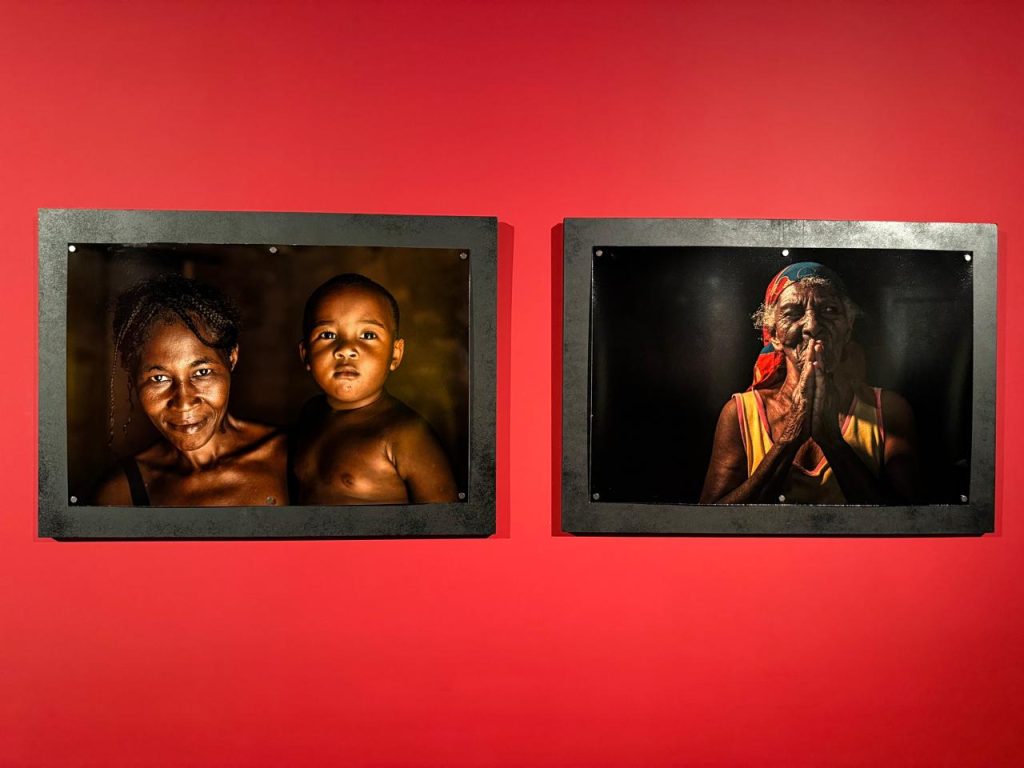
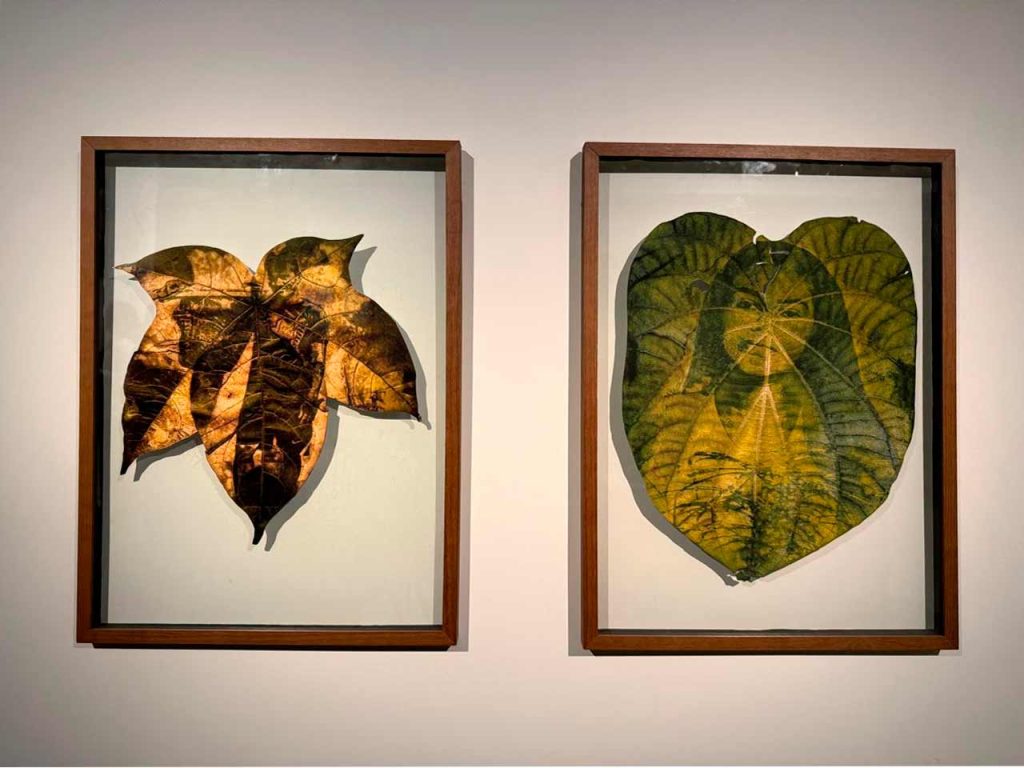
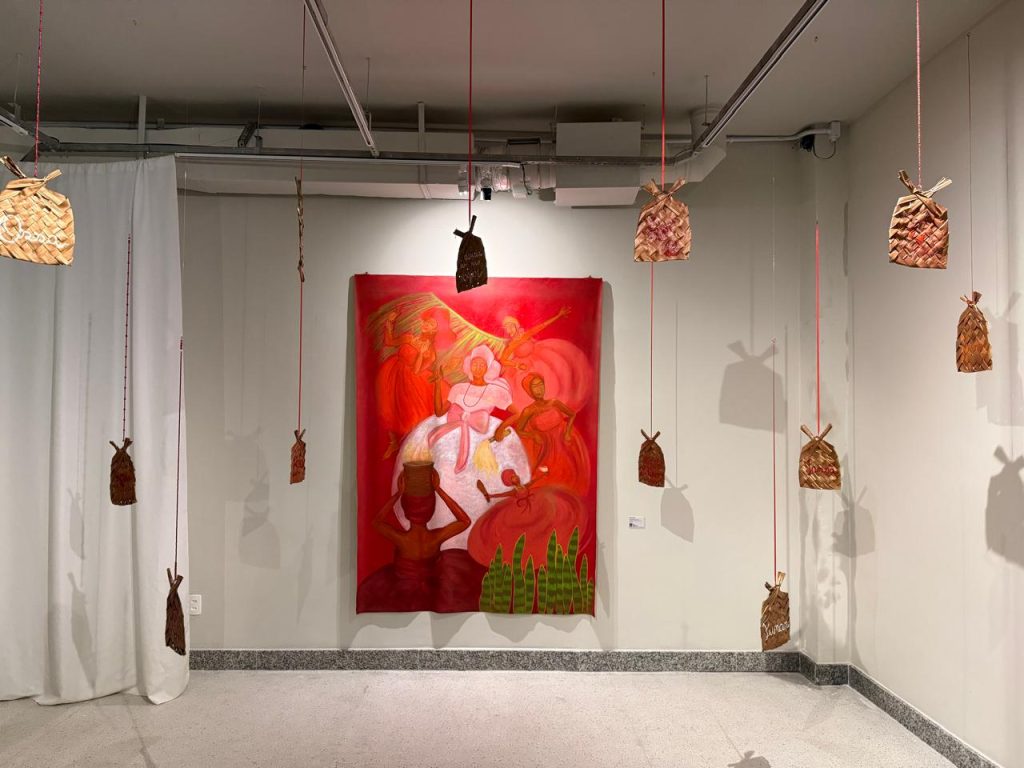
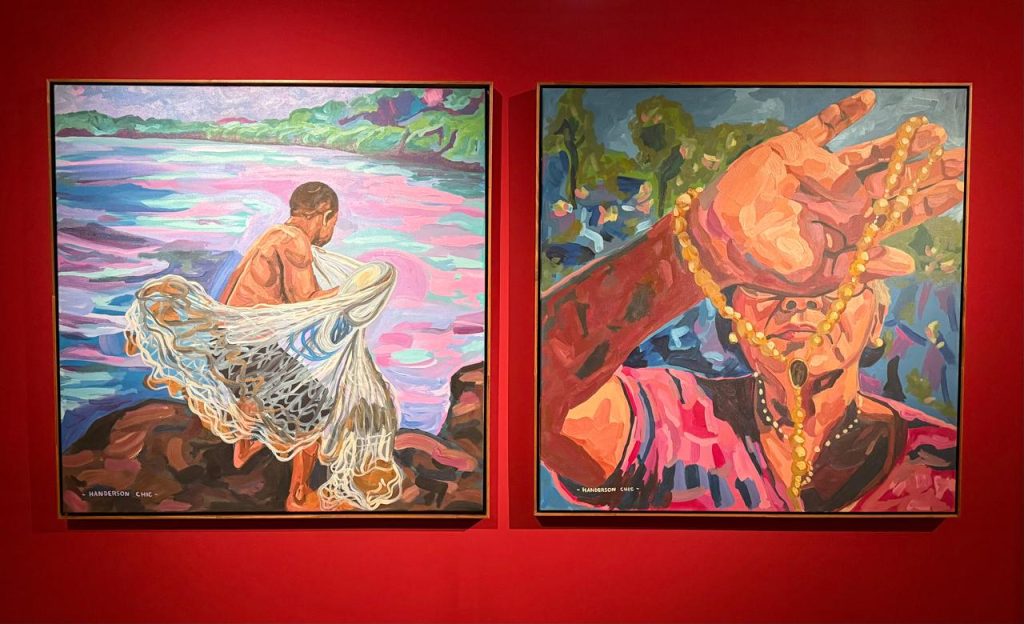
Brazil is the only country named after a tree. From the heartwood of the Brazilwood tree, brasilin is extracted, a substance that, upon contact with air and light, transforms into an intense red pigment, the color of embers. The same reaction that produces the crimson hue, however, reveals the suffering of the species subjected to drastic pruning and violent cuts. It is from this ambivalence, where wealth and devastation are born from a single gesture, that the story begins. Brasilina: Poetics of a Motherland, on display in SESI Cultural Center Gallery, in Jardim da Penha, GHT - Vitória, until October 31st.
Organized by Decoranea and the 1COMUM Collective, the exhibition was conceived by Isabela Castello and Fernando Caseira Nicolau, curated jointly by Isabela and Isabel Portella, and produced by Elaine Pinheiro. The works, from different cities and generations, are organized into three themes: Identity, Nature, and Society.
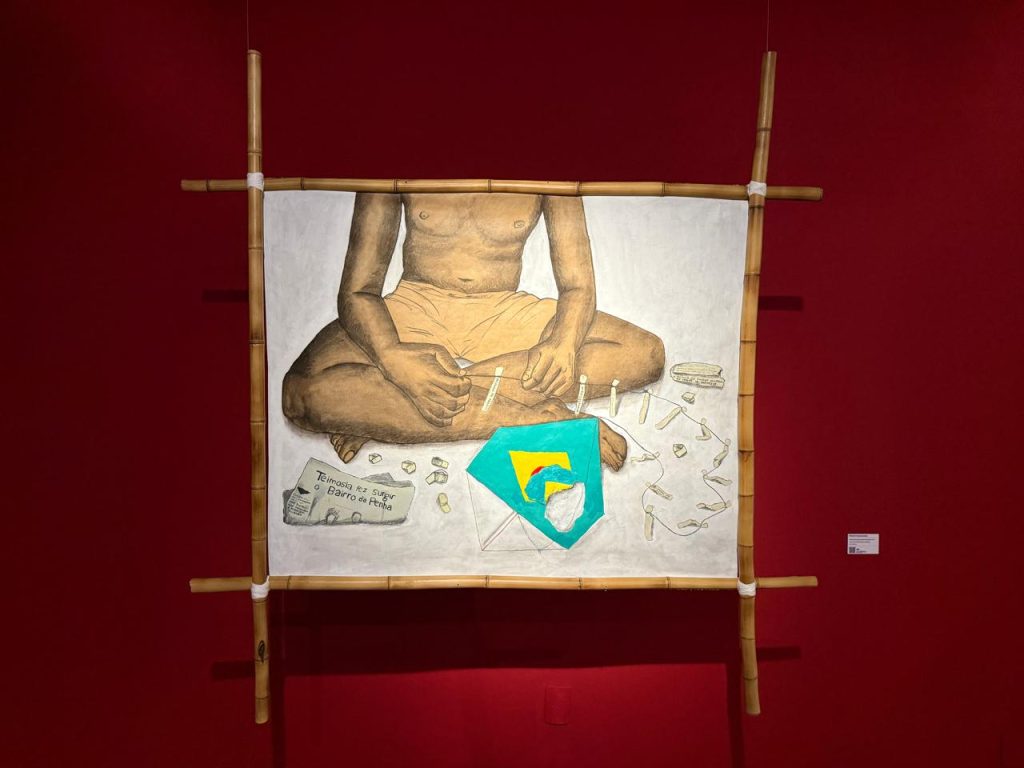
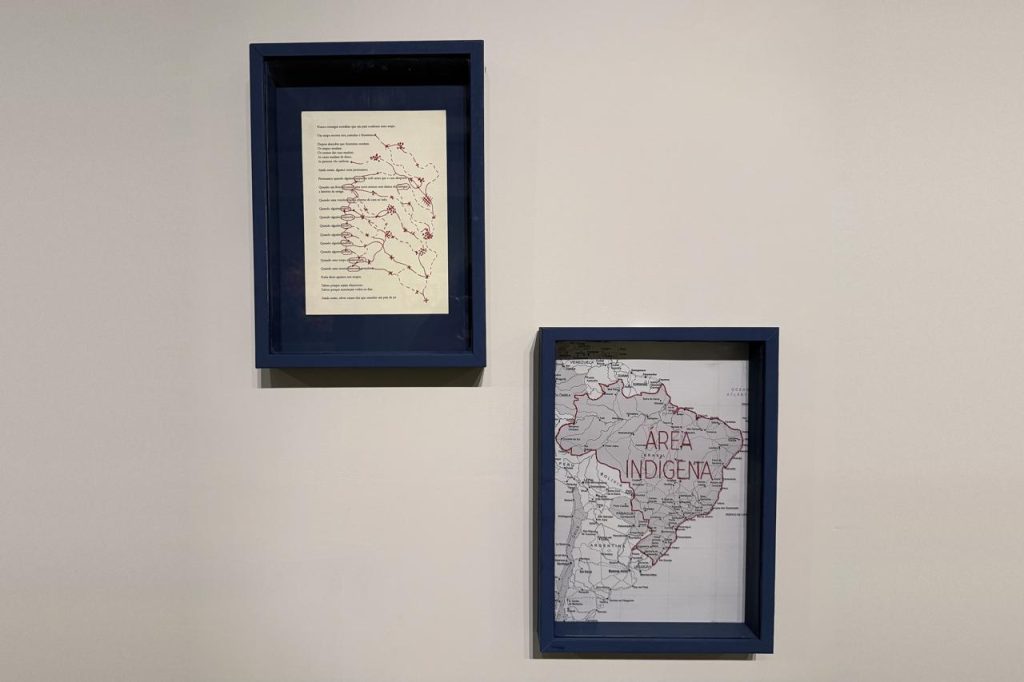
“Is it possible to talk about history without talking about cuts, about trauma? And is talking about cuts, about trauma, regenerating it?” asks Fernando, founder of the 1COMUM Collective. His investigation, which began in 2012 with the performance... If I were IracemaThe exhibition revolves around indigenous peoples, the country's ethnic makeup, colonialism, and decolonial thought—issues that also permeate the conception of the show. According to him, the aim is to confront the wound "sincerely and deeply."
The subtitle announces another proposition. "Fatherland" comes from Latin and designates the paternal land, a word that, for the creator, "is worn out and steeped in immorality." In its place emerges the idea of a motherland nation: the motherland that generates, nourishes, and protects, linked to nature, to ancestry, and to the role of women in the construction of social life. In the same vein, Fernando imagines a new National Anthem, "written and composed by many peoples, many nations."
There is also a reflection on the flag. The motto "Order and Progress" derives from a formulation by Auguste Comte that had love as its principle, a term suppressed in the republican version. Rescuing it means investigating "the lack that love leaves in us as a motto of a nation." Or, in Fernando's words: "There is only desire where there is lack."
A collaborative curatorial effort
Isabel Portella joined the project after its scope had already been defined. Of the 32 names in the exhibition, she suggested 16, artists with whom she had been working and whose research touched on nature and Brazilian ways of being. The other 16 came from Isabela Castello.
The coexistence of art and design, one of the hallmarks of the exhibition, is of particular interest to Isabel. "I see a strong connection between these two fields. The utilitarian object also carries an aesthetic dimension. Design never loses its artistic element," she observes.
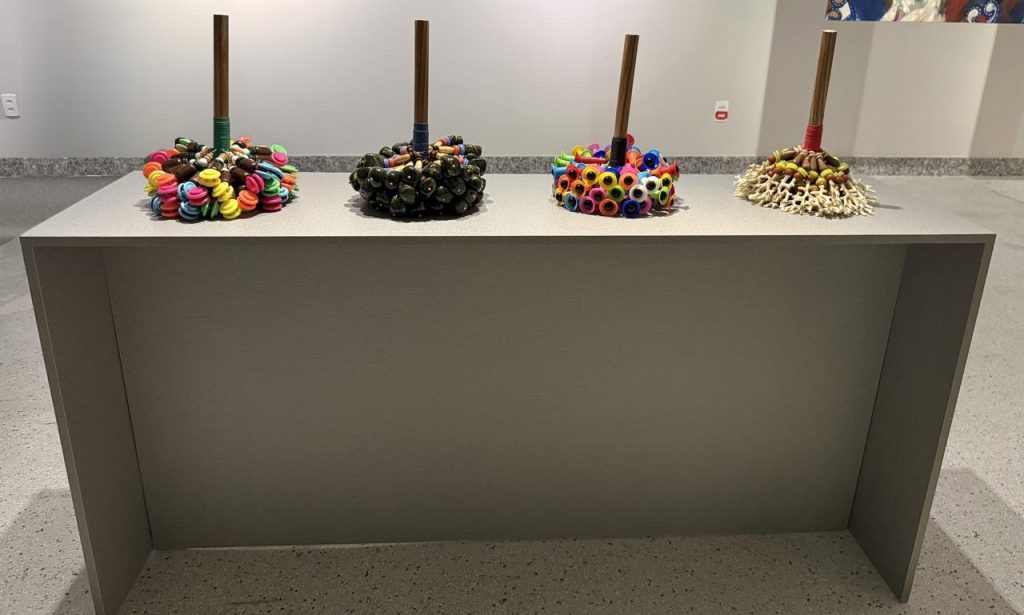
Among the highlights that Isabel Portella points out are the wooden spoons of Mônica Pougy, collected among friends and family and engraved with phrases. Each piece holds a domestic origin—the grandmother, the aunt—and refers to the kitchen as a place where women of various ages meet. “When we talk about food, we connect it a lot to affection. The wooden spoon is in our daily lives and is ancestral, crossing many generations,” comments the curator. Roberta Paiva, in turn, buys plastic toys in Saara, a popular shopping district in downtown Rio, and transforms them into rattles and maculelê instruments, bringing the cheap industrial item closer to archaic forms.
Video, painting, drawing, photography, and objects make up the collection. “The separation of the axes by color brings a distinction, but everything is part of the same exhibition. They are separate and together, in dialogue,” Isabel assesses.
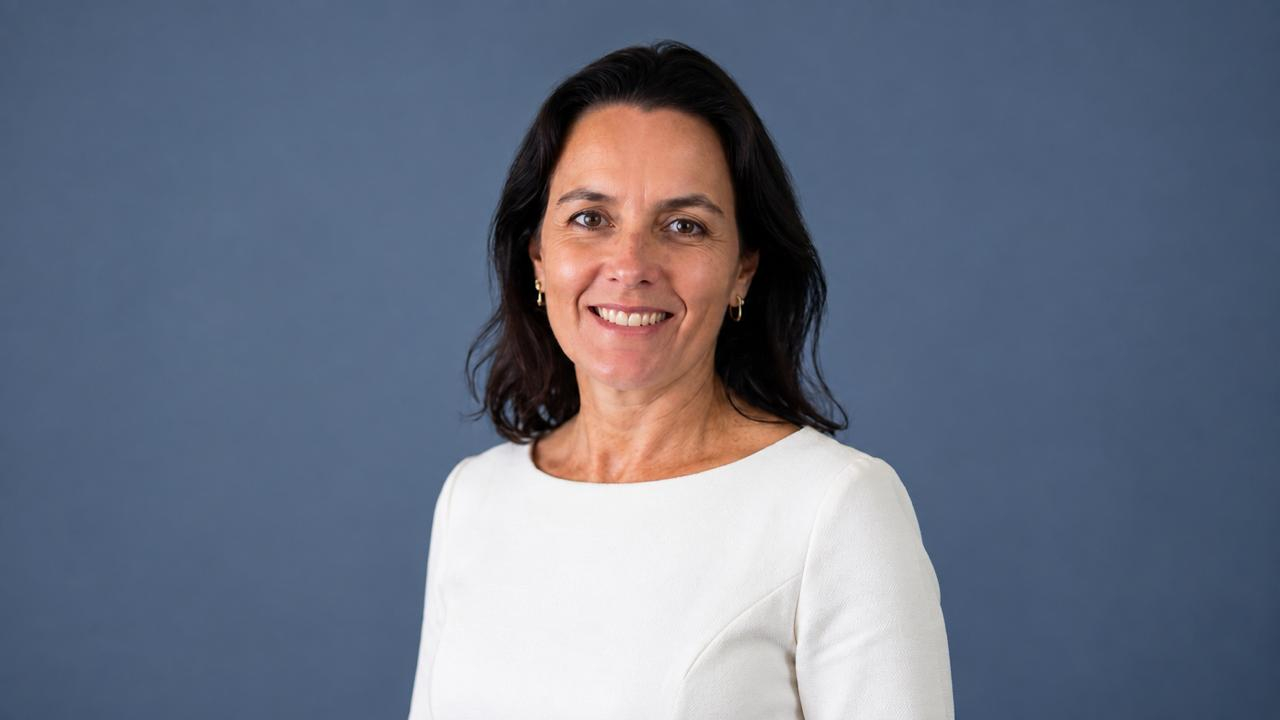
In interview with ARTE!BrasileirosIsabela Castello, artist, curator and founder of Decoranea, discusses the origin of the project, the challenge of sustaining beauty and violence in the same metaphor, the encounter between art and design, the installation and the plans for touring in 2027.
The wound and the affection
Art! ✱ – How did the partnership between Decoranea and the 1COMUM Collective come about, and at what point did the idea for the exhibition become a concrete project?
Isabela Castello: The idea emerged in 2024, when I visited the SESI Cultura gallery. In February 2025, during a meeting with coordinator Giselle Madeira, I understood that the space would undergo renovations and that we could design a project for 2026, after its reopening.
My premise was to create an exhibition that would both challenge and celebrate the creative power, exuberance, and cultural complexity of Brazil. To structure this narrative, I invited the artist and director Fernando Caseira Nicolau. I had already been following his research, both in visual arts and in theater with the 1COMUM Collective. We met at the Cow Parade Vitória/Vila Velha and have been very close ever since. From this conceptual and affective encounter between Decoranea's curatorial vocation and Fernando's scenic-visual investigation, the concept of Brasilina was born.
Art! ✱ – Why start with a chemical substance, and not an image or a symbol, to talk about Brazil?
IC – Brasilina, the active principle, sap, and red pigment extracted from the heartwood of the Brazilwood tree, carries both sides of our history. It represents the natural wealth, color, and creativity of the Brazilian people, but also recalls the beginning of all the colonial exploitation that the territory suffered. To speak of the substance is to speak of what runs in the veins of the country, showing that our identity is made of both beauty and scars.
Art! ✱ – Brasilina carries a history of colonial exploitation and cutting. How to balance beauty and violence in the same metaphor without aestheticizing the wound?
IC – This was our great challenge: to show the beauty and exuberance of the country, but also to highlight the inequalities and contradictions. The power of art lies precisely in its ability to sustain paradox. We selected works that engage with both interpretations of Brasilina, where the visual aspect seduces, but also confronts us with the wounds and memories of the territory. The works juxtapose these two layers: the color that beautifies is the same color that bleeds.
Art! ✱ – The project recovers the love of the original positivist formulation of the motto "Order and Progress". Why bring up this reference right now?
IC – The word "love," present in Auguste Comte's phrase, ended up being omitted from our flag. Reclaiming it is an act of political and poetic urgency. We want to bring back the affection and otherness left out of the official motto and show how this absence is still reflected, in many moments, in the fractures of current society.
Art! ✱ – The “motherland nation” replaces a traditional image of the nation with another. How can we prevent it from becoming a new fixed symbol, which critics have called the risk of a “totemic” figure?
IC – The concept is a gesture of symbolic reinvention. It involves thinking of the country not only as the land of the fathers, but also including the idea of Motherland, which nourishes and sustains. And incorporating a nation constituted by diverse affections and ancestries, linked both to nature and to the women who, throughout history, have sustained the social, cultural, and spiritual life of Brazil.
Art! ✱ – Thinking of Brazil as motherland can engage with Indigenous and Afro-Brazilian cosmologies. Were these references present in the formulation of the concept?
IC – Certainly, they are the foundation of everything. It's impossible to think of Brazil as Motherland without learning from Indigenous and Afro-Brazilian perspectives, which understand nature as part of us and as ancestry, not as something to be destroyed. We were unable to include Indigenous artists in this edition, but we intend to expand in future editions.
Criteria and choices
Art! ✱ – How was it sharing the curatorial duties with Isabel Portella? Where did you converge and where did you diverge?
IC – It was a process of immense intellectual dialogue and professional generosity. Our synergy was evident from the beginning of the year, generating an immediate desire to collaborate. The convergences were broad, especially in the understanding that the exhibition should reflect a plurality of languages and media. It was an exercise in mutual listening and a great deal of learning on my part.
Art! ✱ – What were the criteria for arriving at the 32 names? Was there an invitation, an open call, or both?
IC – The process involved directly inviting artists whose research was intrinsically aligned with the concept. The fundamental criterion was to seek a real diversity of languages and territories: we brought together artists from different cities, generations, and techniques, precisely to map the pulse of contemporary art in the country today.
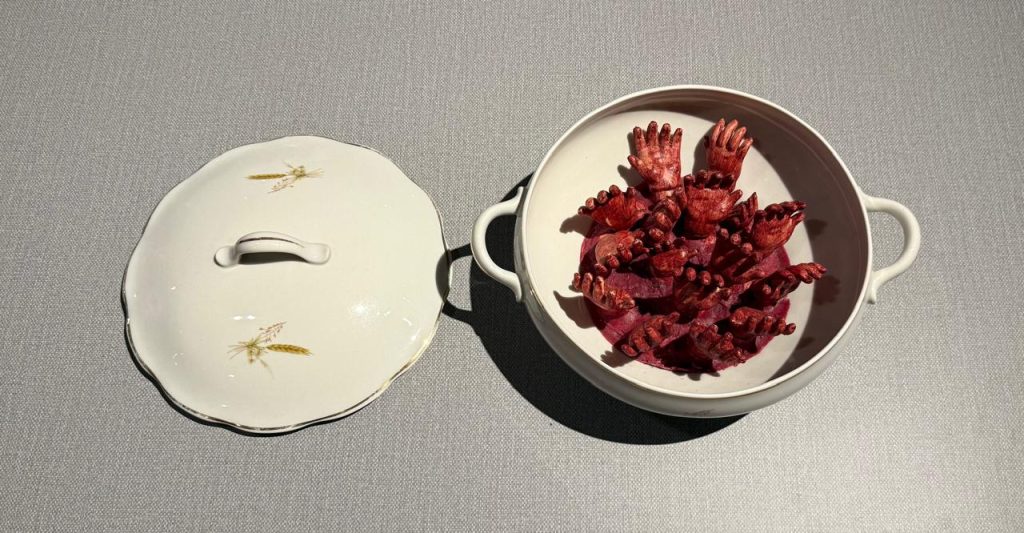
Art! ✱ – The exhibition brings together art and original design side by side. What does this juxtaposition reveal that an exhibition of visual arts alone would not?
IC – Decoranea, my platform for original art and design, was born precisely from the proposal to commercialize productions that move between these two universes, which also drives my artistic work. Design objects, as long as they conceptually dialogue with the exhibition, carry a poetic language and can reflect on territory, matter, memory, biome, and identity. Art and design share the same matrix of conceptual research, affection, and the search for identity. In Brasilina, this union reveals a vibrant Brazil that does not exclude, but welcomes, diverse forms of creative expression.
Art! ✱ – Was there concern about the representation of different regions, generations, and backgrounds among the participants?
IC – We were able to partially meet this demand. We have artists from Espírito Santo, Rio de Janeiro, São Paulo, Pará, Minas Gerais, and Paraná. It wasn't possible to expand further due to the production deadline and limited budget. But we intend to do a touring project in 2027 and, in future editions, expand this geographical representation.
Art! ✱ – The axes of Identity, Nature, and Society intersect all the time. Why maintain the division, if the boundaries between them are so porous?
IC – We understood that it would be more interesting to propose this division into three themes, even knowing that there is constant overlap between them. The concept of Brazilianness is very broad, and the themes served as a methodological lens that helped us both in the curatorial process and in the exhibition design, facilitating the public's navigation.
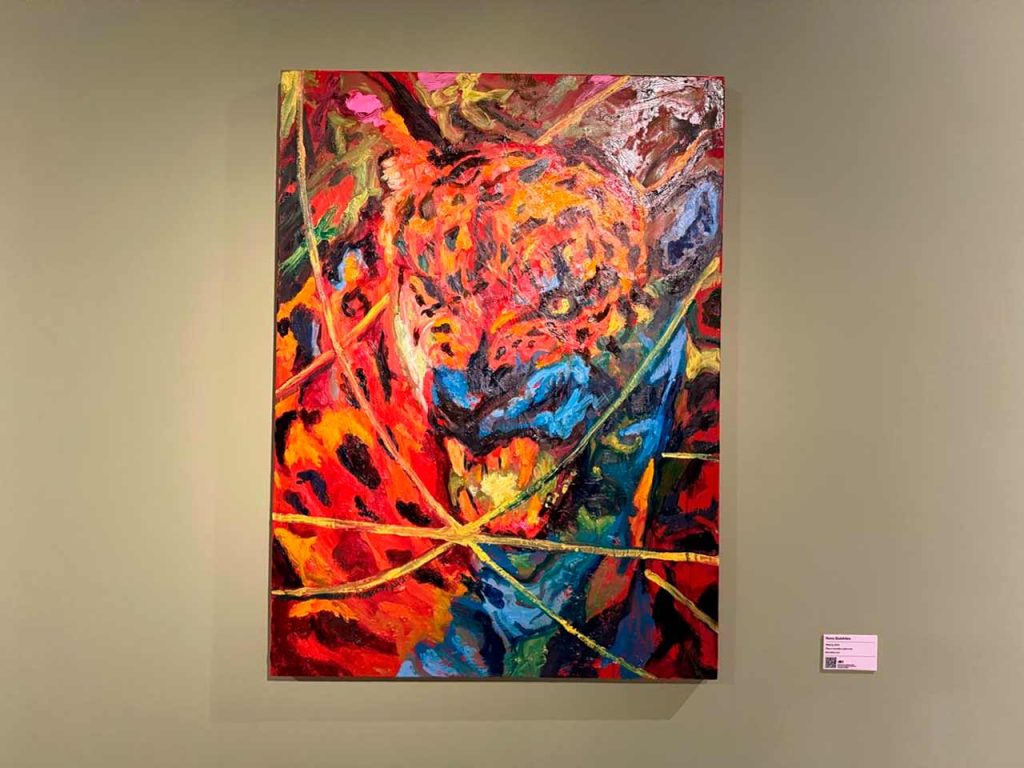
Art! ✱ – Critics point out that the heterogeneity of the works is both a strength and a problem of the exhibition. How do you view this interpretation?
IC – I see this as validation, because Brazil is heterogeneous by nature. We are made up of a mixture of species, soils, ethnicities, voices, and territories, and this multiplicity should be reflected in the artworks. If the exhibition attempted to domesticate it under a homogeneous aesthetic, it would not be a true reflection of the paradox that is Brazil.
Art! ✱ – Is there any work that, for you, synthesizes the idea of Brasilina? Why?
IC – I find it difficult to choose one. Brazil is multifaceted, too exuberant to fit into just one work. I believe that not even the exhibition can define the concept of Brasilina. Our intention was never to give a final answer, but to propose dialogue and reflection, to make people feel and value Brazilianness, without the pretension of exhausting the subject.
Art! ✱ – Did any work change the way you thought about the exhibition during the process?
IC – This being my first experience in curating, I learned that conceiving an exhibition requires being completely open to the process and the unexpected. My own work in the exhibition, Eu-Rio: Amazonas, poetically investigates the metaphor of rivers and the importance of letting them flow. I adopted this same fluid posture in the face of the challenge.
Art! ✱ – How was the installation in the SESI Gallery space conceived, and what challenges did it present?
IC – We faced some challenges, especially dealing with a tight budget, strict deadlines, and a small team for a large quantity and diversity of works. Giulia Bravo, who advised us on the exhibition design, was very successful and sensitive in organizing the space. And, as throughout the entire process, the right combinations made things flow smoothly.
Art! ✱ – Some works could be placed on more than one axis. How did you decide where each one would go?
IC – The themes of Identity and Society are indeed very interconnected. To decide, we first wrote the texts for each theme, clearly defining the focus of each one. Then, we looked at the poetics of each work and evaluated in which theme it would best resonate with the surrounding works and with the audience's experience.
Public and circulation
Art! ✱ – How does Tatiana Rosa's educational program translate these concepts for diverse audiences, including schools?
IC – We are very pleased with the number of school visits. We have heard from teachers how the exhibition engages with so many important concepts in their curriculum. Tatiana Rosa's educational program brings an unfolding of the curatorial concept to these audiences.
Art! ✱ – What new insights did the conversation with the artists bring to the understanding of the exhibition after it opened?
IC – It is always very enriching to be able to engage in dialogue with the artists, to learn more about their individual backgrounds and research, and especially to understand how their work interacts with the concept of the exhibition.
Art! ✱ – The critique proposes considering Brazilian identity within the Latin American context. Could the exhibition engage in dialogue with artists from other countries in the region?
IC – Absolutely. We share with our Latin American neighbors the same history of colonization, the pain, and the immense capacity to resist through art. We already have a foot in that dialogue: the exhibition features an Ecuadorian artist who lives in Vitória. In the future, it would be incredible to expand the project beyond our borders.
Art! ✱ – Which cities are on the horizon for the exhibition's circulation, and might it change as it reaches new territories?
IC – We are still finalizing the project, but the initial idea is to take the exhibition to three cities in 2027. Rio de Janeiro will likely be one of them, partly because it's the city of our co-curator, Isabel Portella. We also very much want to take the exhibition to capitals in the North and Northeast regions of Brazil.
It will definitely transform. Brasilina is a living project, and when it arrives in new places, the intention is to absorb local artists and open space for new narratives. The concept of Brazilianness is porous and dynamic, so the exhibition needs to reflect the reality of each place where it is mounted.
SERVICE
Brasilina: Poetics of a Motherland
Gallery of the SESI Cultural Center, Jardim da Penha, Vitória (ES)
Until October 31, 2026
Tuesday to Saturday, from 10 am to 20 pm. Free admission.