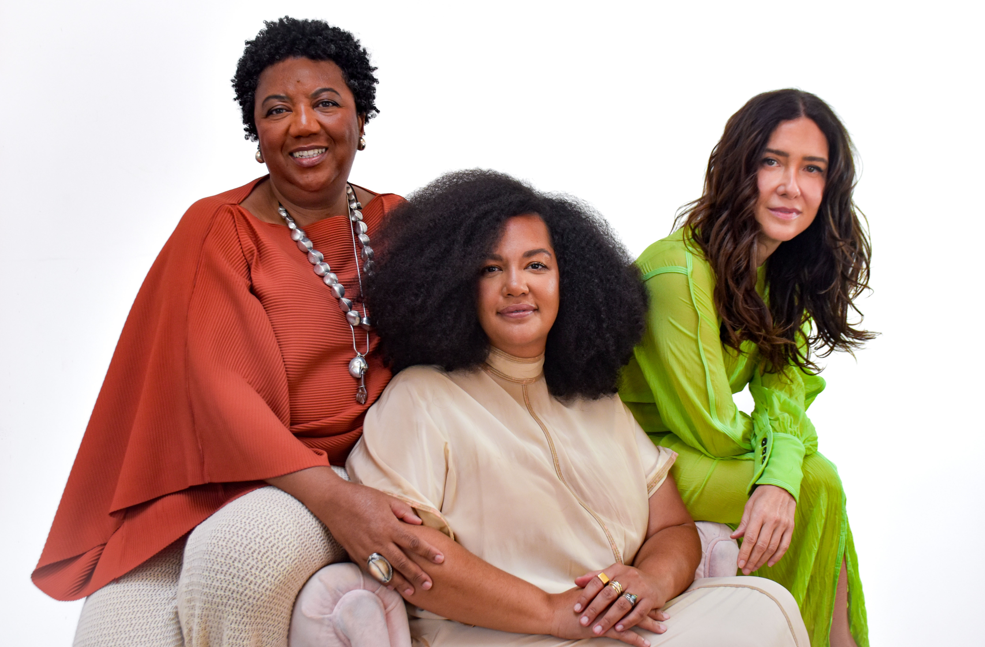
The 61st Venice Biennale opens to the public on May 9th. Brazil Pavilion It will be occupied by works by Rosana Paulino and Adriana Varejão, in a dialogue proposed by curator Diane Lima. Entitled Nobody can mess with me.The project draws from the syncretic and ambiguous characteristics of the plant of the same name, which has become a symbol of protection and resilience due to its toxicity.
The exhibition brings together new and previous works by the artists, organized around a dialogue that encompasses different temporalities, scales, and languages. In conversation with the arte!brasileirosDiane, Rosana, and Adriana discuss this process. The interview has been edited for clarity and conciseness.
arte!brasileiros"Dieffenbachia" is a plant of healing and protection, but also of toxicity. You speak of looking not only at the wounds, but at the processes of regeneration and resistance. How have these contrasts guided the curatorial choices?
Diane Lima: I think that this tension and the presence of a past of colonial violence and a process of metamorphosis, of transformation through spirituality and nature, is at the heart of the project. Nobody can mess with me.. This duality and tension is present in many works. Therefore, the exhibition has an installation-like character. We're saying it's an installation-like exhibition because it seeks to relate to the space of the pavilion, which is a modernist building composed of two rectangles, a beam that cuts through the middle, and, with the new renovation [the The Brazilian Pavilion building, designed by Giancarlo Palanti, Henrique Mindlin, and Walmyr Lima Amaral in 1964, was restored and renovated by the São Paulo Biennial Foundation in partnership with the Ministry of Culture and the Ministry of Foreign Affairs. We have these two side doors in the first room, which provide access to the garden, the building's original purpose, and we are reactivating this original layout by carrying out renovations in the garden.
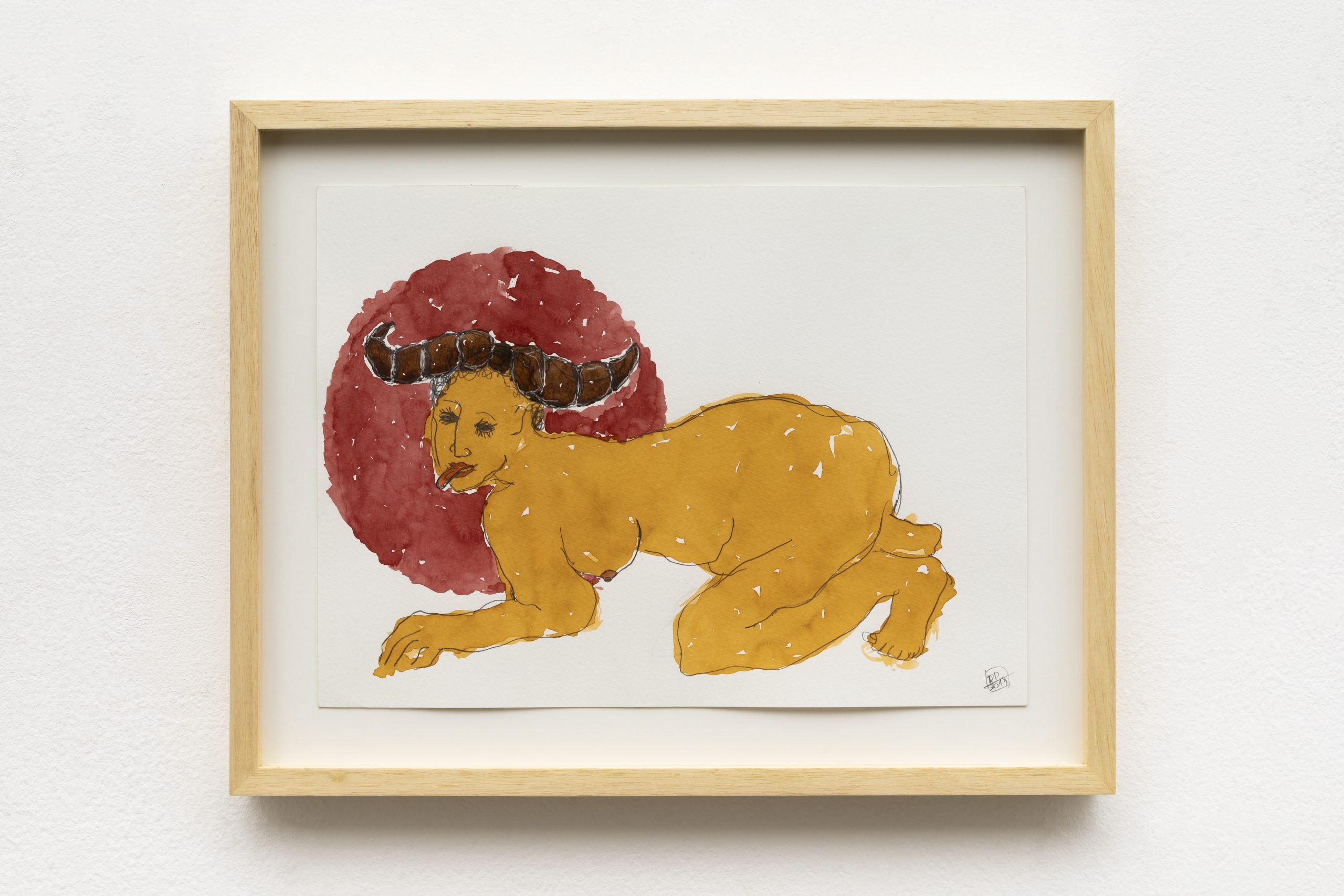
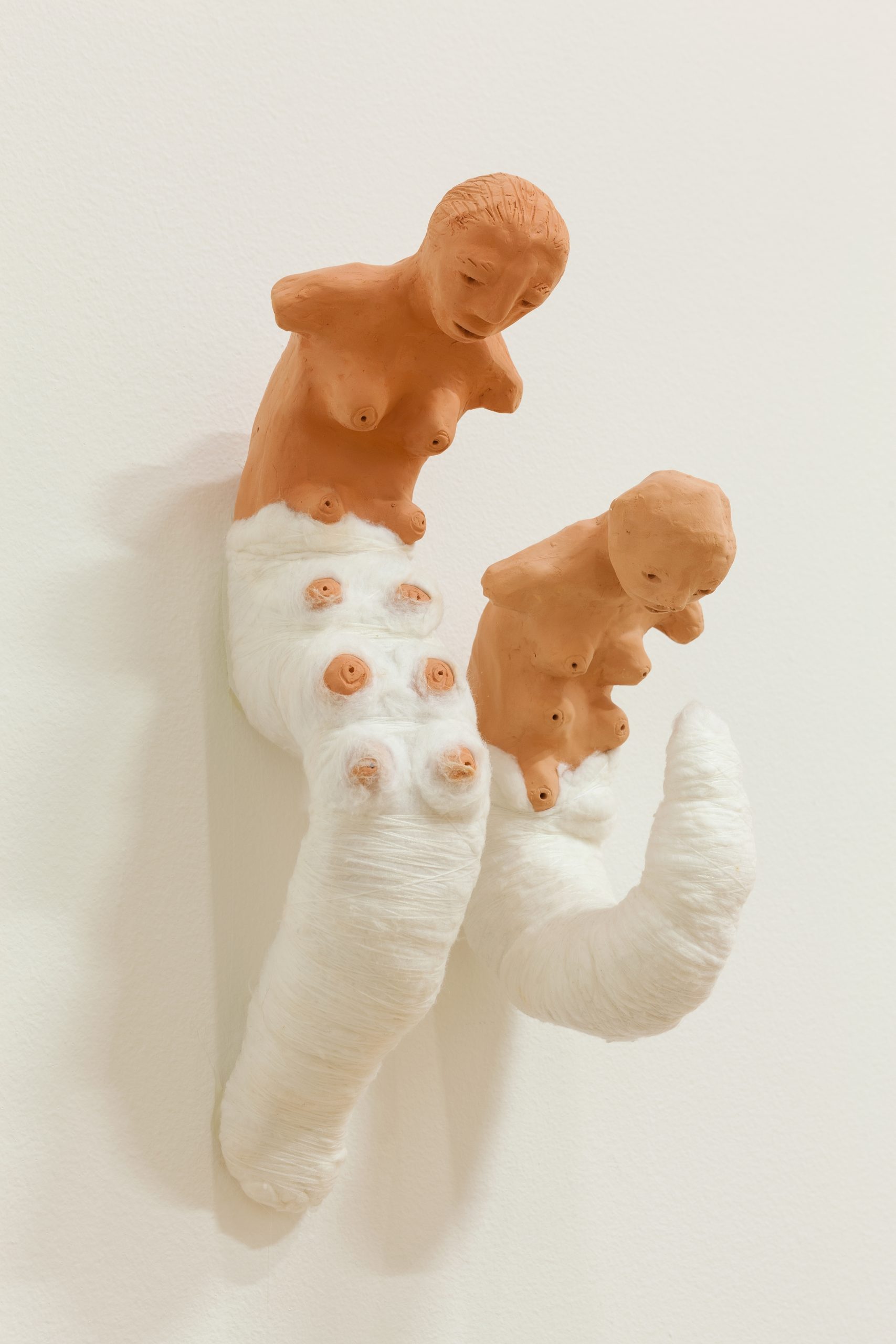
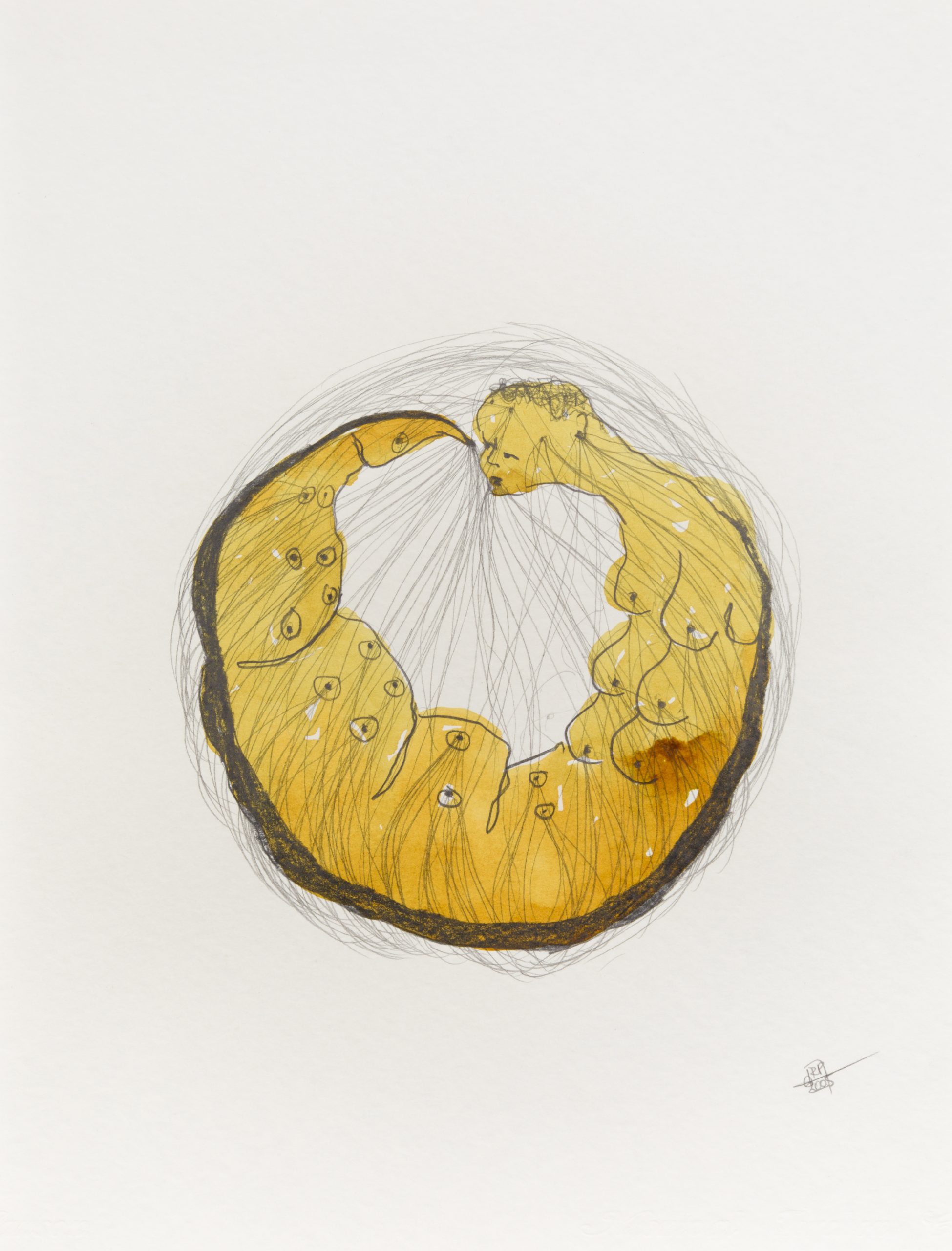
We have a work by Rosana Paulino from 1996, a piece that hasn't been exhibited since the 1990s. The work is 30 years old and exists on a reinforced concrete wall with exposed beams, where Rosana weaves with these lines—something very characteristic of her work—that allude not only to the tradition of sewing, but also to the relationship with spiders and the biological environment, with animals. So, she weaves these figures, which are part of a colonial iconography, images of enslaved people, and thus constructs this central space.
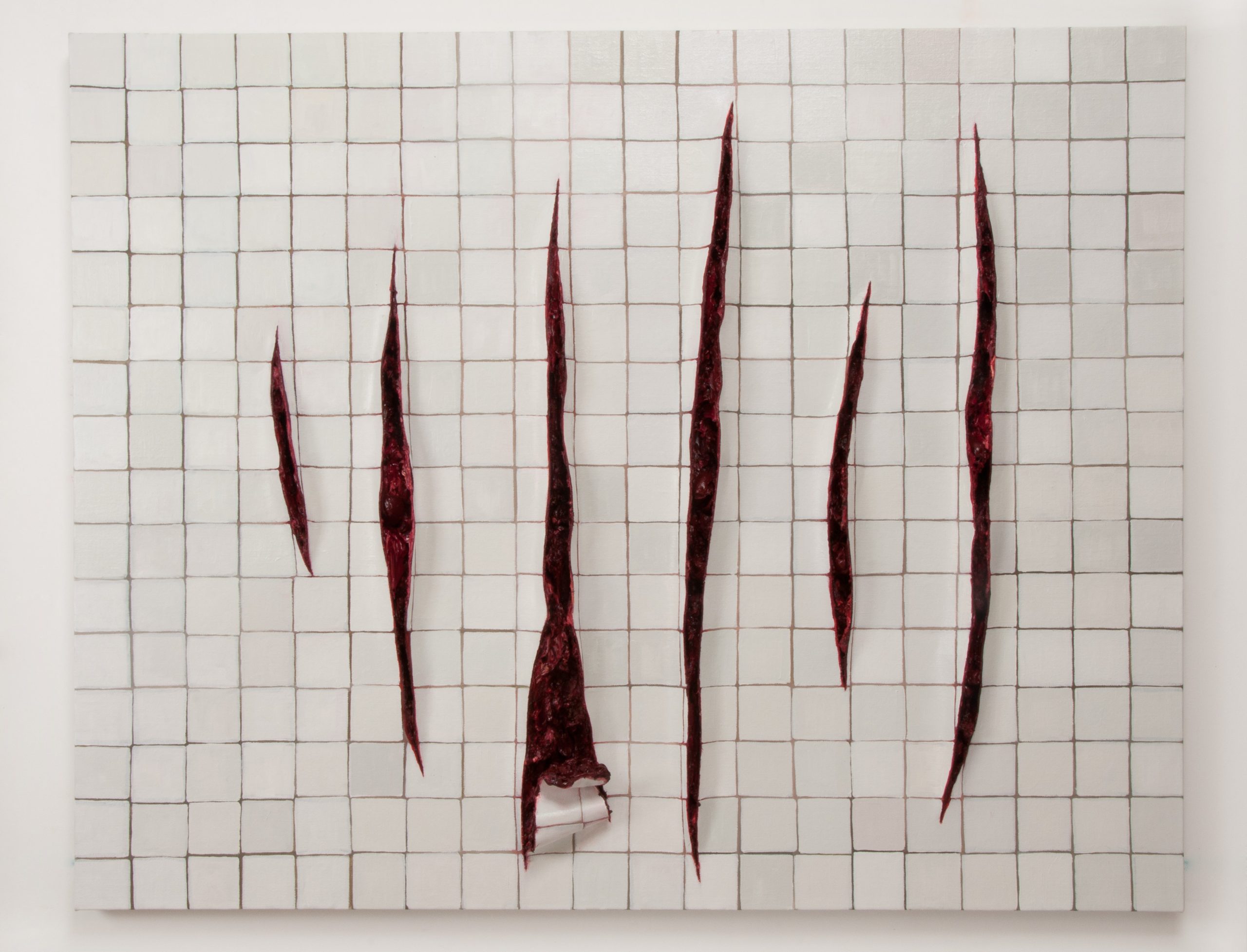
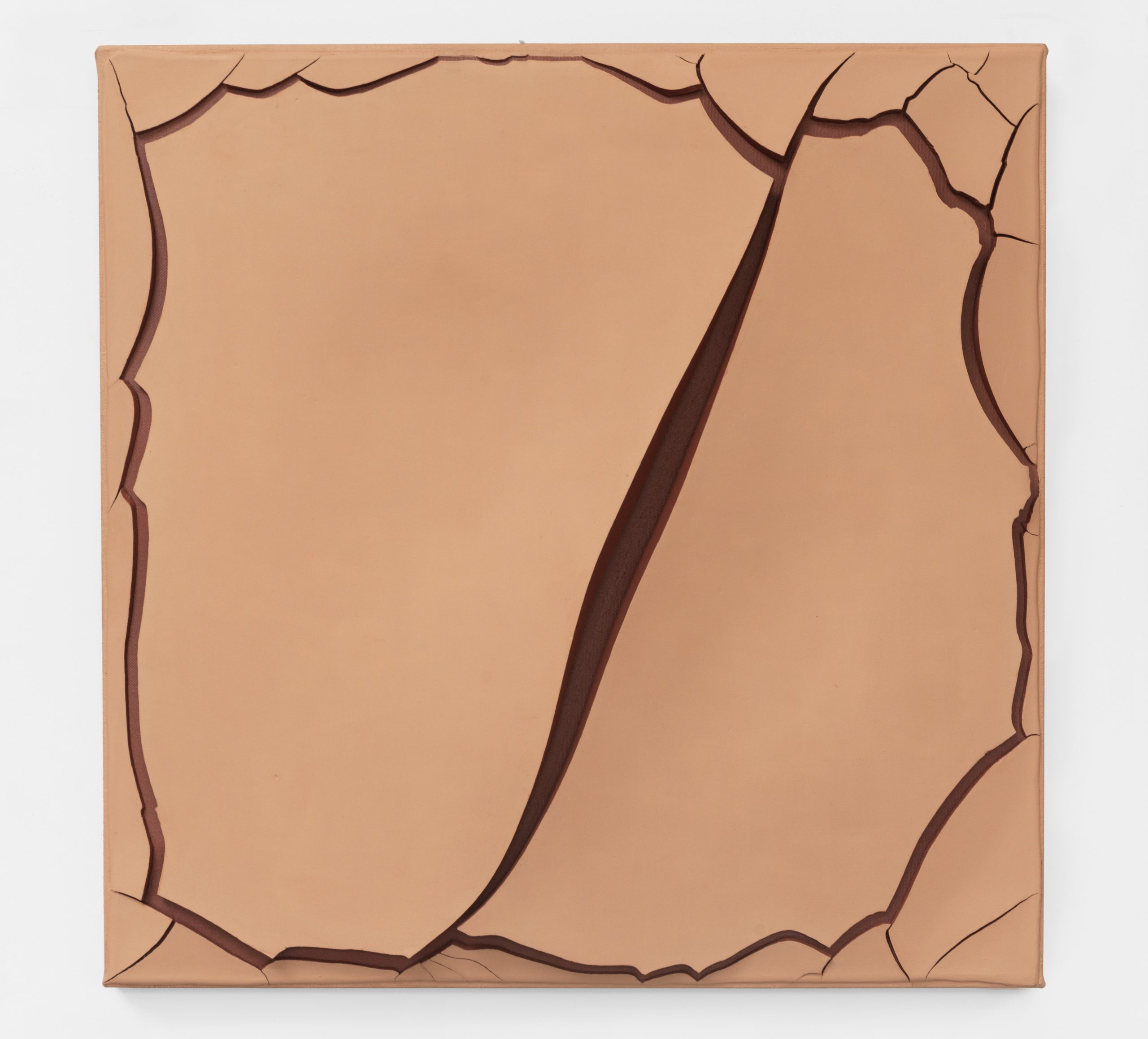
Around this space, we have a very important work by Adriana Varejão: a new piece consisting of a series of ruins that gradually take over the walls of the pavilion in this second room. In these ruins, she simulates different stages of nature: from concrete to flesh, passing through wood carving, gold, until reaching the soil and plants. So, there is this process of metamorphosis, which happens not only in the drawing. Nobody can mess with me.Rosana's drawing, which gives the exhibition its title, is also reflected in other works, such as this piece by Adriana, which is a new work created especially for the Pavilion.
Rosana Paulino: These contrasts, which Di [Diane Lima] stitched together so well, many of them are already present in very old works. As it's a national pavilion, it's important to have not only works made for the exhibition, for this moment, but also older works that will tell a little about our trajectory, that will show how we work. And this is already present in these works as well. The connection, this stitching together, was done in order to bring in old works, but also new works that dialogue with each other. It's not just something made for now, no. It was already there, in research that was much, much earlier.
a!b: Did the existing works influence the creation of new ones? How did the creative process for the new works influence one another?
Adriana Varejão: We are artists of the same generation, Rosana and I. We already have a very defined artistic language. We've been in the profession for 40 years. So, the works develop based on that language, evolving in a spiral within the same language, but with new elements that we add. The older works influenced these new works in the pavilion, and within this dialogue, we sought to choose paths that intertwined. This project is defined as a collective project of the three of us. It's a project in which there was a lot of dialogue, a lot of interaction between us, and proposals made by Diane. It's also a project of constant collective authorship. One person can talk about the work of another. We talk about our work, but we can also suggest things in relation to the work of others. It was a great exchange between us. I think this only happens because we are women.
a!b: Diane, you said that the biggest challenge is presenting the two voices as a single voice. Did you expand your understanding of both of their research by taking this approach?
Diane Lima: The opportunity to do a project like this at the Brazilian Pavilion at the Venice Biennale confronts us with this dilemma and this crisis of representation. This is something we've discussed a lot: what does it mean to represent Brazil, what Brazil are we talking about? It's a country that is the greatest racial laboratory on the planet, so we have a responsibility to look at this history, to retell it from a perspective that accounts for who we truly are. Obviously, I have an understanding, extensive research into the work of both Rosana and Adriana, but when you start working with artists on a project that is so important, you begin to understand how the choices are actually made, beyond a more discursive or conceptual issue. We are dealing with two great artists, not only because they are big names in the media or representatives of something, but because they are artists very committed to practice, to technique, to quality, I would even say unbearable in that sense.
From the beginning, inviting Adriana and Rosana to work together was a risky, audacious idea precisely because of the need for dialogue. Without dialogue, without meeting, without this meticulous care in the creative process, it would have been impossible for this project to happen with the success it already has. I'm going to say the success it already has, not talking about the public or what people will think, but what I believe we internally consider to be the project's success, in terms of its execution and realization.
We will be able to deliver a pavilion through this possibility, this ability to create a dialogue. That is the core of it. Nobody can mess with me.. This compositional choreography was constructed to enhance the pavilion experience. To offer one exhibition, not two, featuring two artists with such striking, iconic works, I would say.
This was a great creative exercise and a great challenge. It's very rewarding when you have two very mature artists who are very aware of their own work and very confident in their own way of doing things. This also allowed us to make these connections based on research that was historical, but also stems from a look at the present, which will bring the results that we will see soon, starting next week.
Rosana Paulino: I thought it wouldn't be possible to put two such powerful works together without one either clashing with or negating the other, because, in reality, they are dealing with the same story. Each from its own point of view, each based on its own research, each maintaining its uniqueness. So, I think what's sought in this case is dialogue. How do you tie these things together without it becoming disjointed, or without favoritism? In short, I think that was perhaps the great challenge.
a!b: In the last interview, conducted by Maria Hirszman, you said that you sought to create tension in the relationship with the building and the space hosting the biennial. Now, with Daniela Thomas's exhibition design, how is this being developed?
Adriana Varejão: We organically occupied these spaces with our works. There isn't a single wall in the building. We proposed works for the spaces. Rosana, with this massive occupation of the second room with this concrete structure, which, in relation to her work from the 1990s, she developed and grew, acquiring a more monumental character in the pavilion, and my idea of occupying the beam. There was a friction, which was the scale, because my work has always been very large-scale and Rosana's was very delicate. Placing one next to the other is problematic. So, Rosana came and returned this work, which she rescued from the past, which is a work of scale, the concrete work from 1996, and I took 12 paintings, which are somewhat hidden in the ceiling of the beam. To see the painting, you have to look up, but you only see it if you are under the beam. If you go to the side, the paintings disappear. So, these were solutions that we found in relation to the occupation of the space.
a!b: Diane, you said you believe that "Brazil will see itself as a reflection and a shadow in the mirror." What do you think the international public will see of Brazil?
Diane Lima: This will be an opportunity for the international public, who know little about, who are unfamiliar with, Brazil's history, to get closer to our past. We have very important works from both artists' careers that manage to bring a bit of this rewriting of history. At the same time, it's an opportunity to understand how we behave culturally.
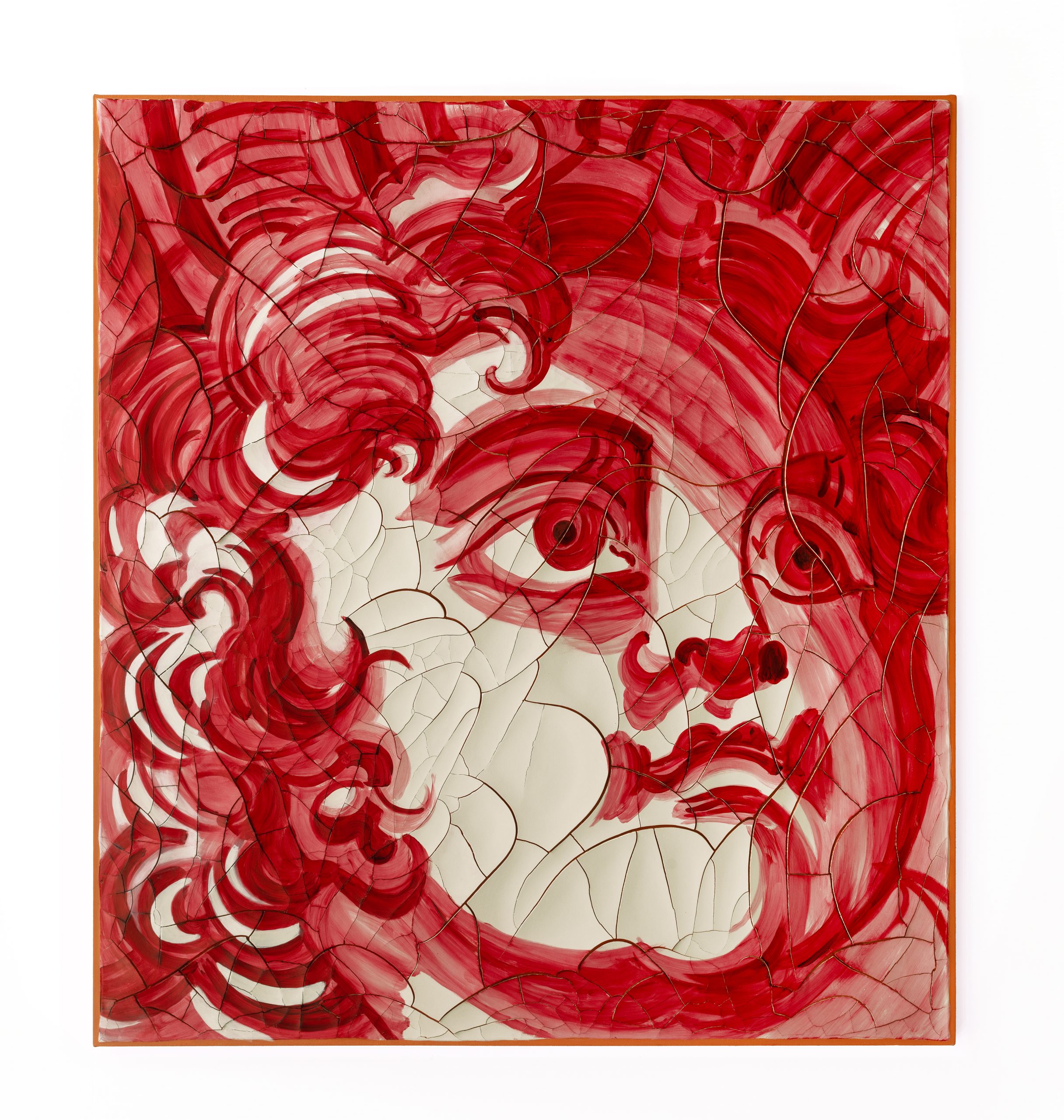
There is, in fact, a specificity to this Brazilian being, which sometimes seems like we're even talking about a stereotype, but we understand how culture is organized in daily life and this spiritual dimension, this collective dimension, this profound relationship with nature, with spiritual and religious syncretism that seems to be something given, but it isn't. In other words, there are a series of elements that will present themselves materially. We have a strong presence of Maragogipinho ceramics, a Brazilian ceramic, which is the largest ceramic center in Latin America. You have a series of materialities, of ways of doing things, that are largely due to the conditions in which we live. This is present in Adriana's practice, it's present in Rosana's practice.
This will be an opportunity to delve deeper into this Brazil, at a time when Brazil has made an important contribution to understanding the presence of this colonial violence not only in Latin America, but throughout the globe. Brazil has a responsibility in this regard, and I strongly believe that we are making an important contribution to this debate.
I hope people enjoy it as much as we enjoyed making this project and that they can feel some of the energy that is... Nobody can mess with me. Also.